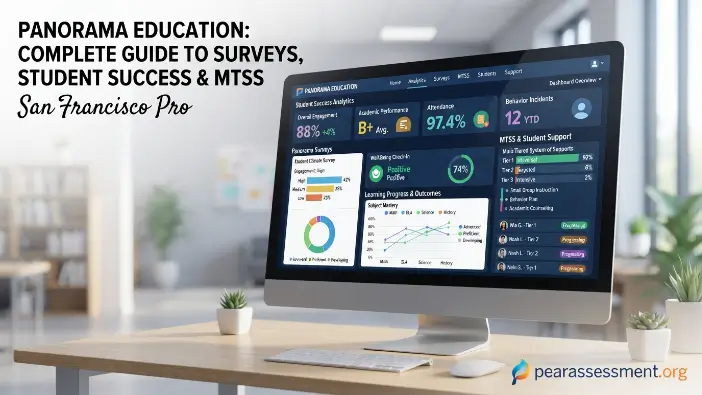
Welcome to Pear Assessment. Panorama Education is a K–12 education technology platform that helps schools understand and support students. It brings together information such as academics, attendance, behavior, well-being, and student voice so educators can make better support decisions. Panorama says its platform supports more than 15 million students across 25,000 schools and 2,000 districts in the United States.
Schools can use Panorama Education for student success, MTSS, surveys, interventions, behavior tracking, and graduation planning. The goal is not simply to collect more data, but to help educators turn useful information into action. This guide explains how Panorama works, its main features, surveys, privacy approach, and practical considerations.
What Is Panorama Education?
Panorama Education is a U.S.-based education technology company founded in 2012 that helps K–12 schools and districts better understand and support students. Its platform brings information such as academic performance, attendance, behavior, student engagement, and well-being together so educators can look at the wider picture instead of depending on one indicator. For example, declining grades combined with frequent absences may point to a need for additional support. Schools can use these insights for MTSS, intervention planning, progress monitoring, surveys, and school improvement, although the available tools depend on the products and services selected by each district.
What Panorama Education Does
The main role of Panorama Education is to turn different types of student information into useful insights for educators. By connecting data from areas such as academics, attendance, behavior, and surveys, the platform can help school teams identify patterns, understand possible student needs, plan interventions, and follow progress over time. This broader view can make it easier to recognize concerns that may not be clear from academic results alone.
Panorama also supports student voice and school improvement through surveys and engagement tools. Schools can use feedback from students, families, teachers, and staff to understand areas such as belonging, school climate, and engagement. This information can then support planning and conversations, while educators remain responsible for interpreting the data and deciding what action is appropriate.
Who Uses Panorama Education?
Panorama Education is designed for different users across the school community, with each group using the platform differently:
- Teachers: Review student information and support classroom interventions.
- School leaders: Identify school-level trends and areas that need attention.
- MTSS teams: Coordinate targeted support and monitor intervention progress.
- District leaders: Examine broader patterns across schools and student groups.
- Students: Share feedback and, where enabled, view information related to their progress.
- Families: Provide feedback and participate in selected student-support activities.
Access and features are not identical for every user. A district may choose which Panorama products to use and how they are configured, so the information available to teachers, students, or families can vary between school systems.
How Does Panorama Education Work?
At its core, Panorama Education helps schools turn student information into practical support. It brings relevant data together, helps educators identify meaningful patterns, and supports decisions about student interventions and follow-up. Instead of reviewing isolated information, school teams can consider several indicators together, take appropriate action, and monitor whether the support is making a difference.
Bringing Student Data Into One View
Student information is often stored across different systems, such as student information systems, assessment platforms, surveys, and intervention records. Panorama Student Success is designed to connect relevant information from these sources and give educators a broader view of a student’s needs.
Depending on the district’s setup, educators may be able to review:
- Grades and coursework — helps identify academic changes.
- Attendance — shows patterns in absences or attendance concerns.
- Behavior — provides context about behavioral changes.
- Assessments — helps track academic performance and progress.
- Student engagement and life skills — provides additional insight into student development.
- Survey and intervention information — adds student feedback and support history.
Seeing these areas together can provide more useful context. For example, lower grades combined with frequent absences or reduced engagement may indicate that a student needs further review or additional support.
Turning Data Into Student Support
Panorama Education can support a simple intervention process:
- Review data to understand the student’s current situation.
- Identify patterns that may require attention.
- Consider context before deciding what support is appropriate.
- Choose an intervention based on the student’s needs.
- Monitor progress to see whether the support is working.
- Adjust the plan when progress is limited or needs change.
This approach helps schools move from collecting information to data-driven decision-making. The platform provides information and workflows, while educators use their professional judgment to decide what action is appropriate.
Early Warning and Student Support
Early warning indicators can help educators notice possible concerns before they become more serious. Changes in attendance, coursework, assessments, or behavior can be reviewed together to identify students who may need additional attention. Panorama Education can support this process by helping educators identify students who may benefit from targeted or intensive MTSS interventions.
An indicator should not be treated as a final judgment about a student. It is better used as a starting point for discussion and further investigation. Educators should consider individual circumstances, classroom context, and other relevant information before selecting the right support.
Read Also: Pear Assessment Reports: Complete Teacher Guide
Panorama Education Features and Products
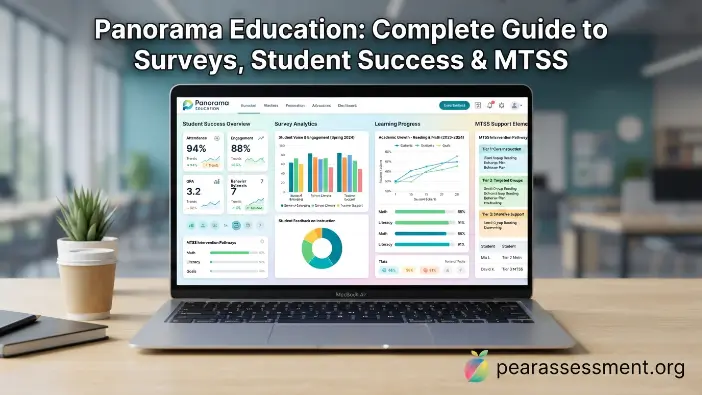
The Panorama Education platform offers several products that support different areas of student success, student support, and school improvement. These tools cover intervention management, surveys, behavior insights, graduation planning, and AI-assisted educator tasks. Each product serves a different purpose, while the exact features available depend on the products selected and configured by a school or district.
Panorama Student Success
Panorama Student Success is designed around MTSS and student support. It brings student information and intervention workflows together so educators can identify needs, create support plans, coordinate with colleagues, and monitor progress. This makes it useful for schools that want a more organized approach to identifying students who may need additional academic, behavioral, or other support.
Common uses include:
- Reviewing student data: Helps educators understand student needs and identify important patterns.
- Creating and tracking interventions: Supports organized planning for students who need extra help.
- Monitoring progress: Allows teams to review changes over time and evaluate support.
- Coordinating student support: Helps teachers, counselors, and other staff work from shared information.
- Reviewing trends: Gives schools and districts a broader view of student needs and outcomes.
Panorama Surveys and Engagement
Panorama Surveys and Engagement helps schools collect feedback from students, families, teachers, and staff. Unlike academic or attendance records, survey responses can provide insight into how people experience the school environment. This can help schools understand areas that may need attention and support more informed school improvement planning.
Surveys can cover areas such as:
- School climate and student engagement
- Belonging and relationships
- Teaching and learning
- Family-school relationships
- Staff experience
Panorama says its surveys are research-backed, and its student survey work was developed with researchers at Harvard Graduate School of Education. Schools can use the results to identify strengths, recognize concerns, and track changes in feedback over time.
Behavior Logging and Analytics
Behavior Logging and Analytics adds behavior data to the wider student picture. Schools can record relevant behavior information, identify recurring patterns, and review these patterns alongside academic performance, attendance, and other indicators. This can give educators more context when they are trying to understand a student’s needs.
For example, repeated behavior concerns may be more meaningful when they occur alongside attendance problems or reduced engagement. Reviewing these connections can support better intervention planning, although behavior data should be considered alongside professional judgment and the student’s individual circumstances.
Panorama Pathways
Panorama Pathways focuses on graduation tracking and student readiness. It helps schools manage areas such as graduation requirements, transcript audits, scheduling, career and technical education requirements, and individualized student plans.
For counselors and school leaders, these tools can make it easier to identify missing requirements or possible graduation issues before they become serious problems. This can reduce manual record-checking and help schools keep students on track toward graduation and future goals.
Panorama Solara and AI
Panorama Solara is Panorama’s AI-powered education platform designed to help educators handle common student-support tasks. Depending on the district’s setup, it can assist with creating intervention plans, family communications, progress reports, and other support materials using relevant district information and resources.
Solara can also work with other Panorama products, including Student Success, Surveys and Engagement, and Pathways. This can provide additional context for certain educator workflows. However, AI-generated content should be reviewed by educators before it is shared with students or families, especially when it involves sensitive student information or support decisions.
Panorama Education Surveys: What Are They Used For?
Panorama Education surveys help schools understand how students, families, teachers, and staff experience their school environment. They collect information that may not appear in grades, attendance records, or behavior data, giving educators a better view of school climate, student engagement, relationships, and other aspects of the school experience. Schools can use this feedback to identify concerns, understand strengths, and support improvement efforts.
Student Surveys
The Panorama Student Survey allows students to share their views about areas such as school climate, teaching and learning, relationships, and belonging. Panorama says its student survey was developed with researchers at Harvard Graduate School of Education, with research-based question designed to capture important parts of the student experience.
The survey can help schools understand questions that traditional student data cannot answer, such as:
- Belonging: Do students feel accepted and connected at school?
- Adult support: Do students feel that teachers and other adults support them?
- Learning environment: How do students view their classroom and school experience?
- Areas for improvement: What parts of school life may need more attention?
Teacher, Staff, and Family Surveys
Panorama Education also provides surveys for teachers, staff, and families. These surveys allow schools to collect different perspectives about the same learning environment and compare feedback across groups when appropriate.
For example, students may report concerns about belonging while teachers or families identify related issues from a different perspective. Looking at these viewpoints together can help school leaders understand common themes and decide where further discussion or action may be useful.
How Schools Use Survey Results
Survey results can support several school improvement activities, including:
- Identifying trends: Finding repeated patterns in feedback.
- Recognizing strengths: Understanding what students and school communities value.
- Finding improvement areas: Identifying issues that may need attention.
- Comparing results: Reviewing changes across different survey periods.
- Supporting planning: Using feedback to guide school improvement efforts.
- Starting conversations: Creating opportunities for meaningful discussion with students and staff.
Panorama provides reporting tools and benchmarks to help schools examine survey results. However, collecting responses is only the first step. The real value comes from interpreting the findings carefully, discussing them with the school community, and taking practical action based on what the data shows.
How Panorama Supports MTSS and Student Interventions
Panorama Education supports Multi-Tiered System of Supports (MTSS), a framework schools use to provide different levels of academic, behavioral, and other support based on student needs. By connecting student information with MTSS workflows, schools can identify students who may need additional help, organize interventions, and monitor progress. This allows support teams to move from identifying a concern to taking structured action.
Panorama and MTSS
Schools can use Panorama Student Success to organize student information and support activities across different levels of MTSS. The three-tier model generally works as follows:
- Tier 1: Universal support provided to all students through regular classroom and school practices.
- Tier 2: Targeted support for students who need additional help beyond universal strategies.
- Tier 3: More intensive and individualized support for students with greater or ongoing needs.
Panorama can help educators document support, coordinate with other team members, and review progress at the classroom, school, and district levels. The platform supports the workflow, while educators determine which level and type of intervention is appropriate.
Intervention Planning and Progress Monitoring
When a student needs additional support, educators can create an intervention plan based on the student’s needs and available information. The plan can identify the type of support being provided and give the team a way to monitor changes over time.
Progress monitoring helps educators determine whether an intervention is producing the expected results. If progress remains limited, the team can review the strategy, consider other factors affecting the student, and adjust the support rather than continuing with an approach that may not be effective.
Using Academic, Attendance, and Behavior Data Together
Looking at only one student metric can provide an incomplete picture. Panorama Education can help educators consider multiple indicators together, such as:
- Attendance: Frequent absences may affect learning and participation.
- Academic performance: Changes in grades or assessment results may show learning difficulties.
- Behavior: New or repeated behavior concerns may provide additional context.
- Engagement and belonging: Low engagement or weak connections at school may affect a student’s experience.
Connecting these signals can help educators explore possible root causes instead of responding only to the visible problem. This broader view can lead to more appropriate interventions while keeping individual student circumstances and professional judgment at the center of the decision.
Benefits of Using Panorama Education
The main potential benefits of Panorama Education include:
- Centralized student information: Relevant data can be viewed in one platform.
- Earlier identification: Schools can identify possible concerns sooner.
- Coordinated interventions: Teams can organize and monitor student support.
- Data-informed decisions: Educators can use multiple indicators when planning support.
- Student voice: Surveys give students an opportunity to share their experiences.
- Progress monitoring: Teams can review whether interventions are producing progress.
- System-level visibility: District leaders can identify broader trends.
Panorama reports research showing associations between Student Success use and gains in math and reading, and its research page describes ESSA Level II evidence for Student Success. These findings should be understood as research evidence, not a guarantee of results for every school or student.
Panorama Education Data Privacy and Security
Student information is sensitive, making data privacy and security important when schools use education technology. Panorama Education states that its platform is designed to handle student information for services provided to schools and districts. How that information is collected, accessed, and used can also depend on district agreements, local policies, and the specific Panorama products in use.
How Panorama Handles Student Data
According to Panorama, student data is used to provide services to schools and districts. The company states that it does not share education or student information unless the school or district authorizes the sharing or applicable law allows it. This means the district’s agreement and configuration can play an important role in determining how the platform handles information.
Schools and districts should therefore understand their own data-sharing agreements and internal policies. The way Panorama Education is used may differ between districts depending on their requirements, products, and access settings.
FERPA, COPPA, and Other Standards
Panorama Education states that it complies with FERPA, PPRA, and COPPA, which are important U.S. laws related to student and children’s privacy. Panorama also states that it does not sell or rent students’ personal information and does not use student information to advertise to students.
However, schools should not rely on a platform’s compliance statements alone. Before adopting or expanding an education technology service, districts should review contracts, privacy requirements, security practices, and their own responsibilities for protecting student information.
What Parents and Students Should Know
Parents and students can ask the school or district how Panorama Education is being used and what information is involved. Important questions include:
- What data is collected? Understand which student or survey information is included.
- Why is it collected? Ask how the information supports education or student services.
- Which tools are used? Districts may use some Panorama products but not others.
- How are surveys managed? Ask when surveys are given and what topics they cover.
- Who can access the data? Understand which school or district staff may see the information.
- What local policies apply? District privacy rules may affect how information is handled.
Panorama says individual districts decide when and how surveys are administered and which questions are included. For that reason, parents and students should check with their own school or district for details about local use.
Panorama Education for Teachers, Students, and Families
The value of Panorama Education can vary depending on how a person interacts with the platform. Teachers may use it for student support and interventions, students may use it to provide feedback or access progress information, and families can contribute their views through surveys and other school processes. Together, these roles can support a more connected approach to student success.
For Teachers
Teachers may use Panorama Education to review student information, identify possible support needs, create and track interventions, and monitor progress. The platform can also provide access to evidence-based strategies and relevant student insights, helping teachers make more informed support decisions.
By bringing information and support workflows together, Panorama can reduce the need to search across multiple systems. This can save time and help teachers focus more on understanding student needs and providing appropriate classroom support.
For Students
Students may participate in Panorama Education through student surveys, giving them an opportunity to share their experiences and views about school. Depending on the products enabled by their district, students may also access student-facing tools that provide information about progress, graduation requirements, or future planning.
For example, Panorama’s student-facing tools can connect students with information related to graduation, career and technical education (CTE) completion, and other district-configured pathways. This can give students a clearer view of their academic progress and what they may need to complete next.
For Families
Families can take part through family engagement surveys and selected student-support activities. Their feedback can give schools another perspective on student experiences, communication, and the overall learning environment.
Clear communication is important when families participate. Schools should explain what information is being collected, why it is needed, and how the feedback may be used for student support or school improvement. This helps families understand their role and make informed decisions about their participation.
Panorama Education Login and Access
There is no single Panorama Education login method for every school or district. Access usually depends on how the school has configured Panorama and which systems it uses for authentication. For the student-facing application, Panorama says students may access the platform through district systems such as Clever or ClassLink using Single Sign-On (SSO).
If you are trying to access Panorama, follow these basic steps:
- Open your school or district portal and look for the Panorama option.
- Check Clever or ClassLink if your school uses either system for SSO.
- Sign in with your school-provided account rather than creating an unofficial account.
- Contact your school or district if Panorama is not listed or your login does not work.
If you find a login page through a search engine, make sure it is an official school, district, or Panorama-approved page before entering your credentials. Avoid unofficial websites that request your school username or password.
Is Panorama Education a Learning Management System?
No. Panorama Education is not primarily a traditional Learning Management System (LMS). An LMS is mainly used to manage courses, assignments, lessons, instructional materials, grades, and other day-to-day classroom activities. Panorama has a different focus: helping schools understand and support students through student data, MTSS, surveys, interventions, engagement, and related support workflows.
Panorama also states that it does not provide curriculum to districts. This means schools can use Panorama alongside an LMS rather than treating it as a replacement. For example, an LMS may handle classroom assignments and course content, while Panorama can help educators review student success information and coordinate additional support. Schools may also connect both systems with a student information system, assessment tools, or other education technology.
Common Challenges and Best Practices
Using Panorama Education effectively requires more than collecting student information. Schools need clear goals, trained staff, consistent processes, and responsible use of student data. When technology is connected to practical support strategies, educators can make better use of the information without creating unnecessary work.
Avoiding Data Overload
Having more data does not always lead to better decisions. Too many dashboards, alerts, and metrics can make it difficult for educators to identify the information that actually matters. Schools should focus on data that directly supports their student success goals and intervention processes.
A simple approach is to decide what information is needed before creating new reporting routines. This helps staff spend less time sorting through data and more time understanding student needs.
Turning Survey Results Into Action
Collecting student voice through surveys is only useful when schools act on what they learn. After reviewing the results, school teams should focus on the findings that are most relevant to their goals rather than trying to address every issue at once.
A practical process is:
- Identify key findings that require attention.
- Discuss possible causes with relevant staff and stakeholders.
- Choose a few priorities that can realistically be addressed.
- Create an action plan with clear responsibilities.
- Review results later to see whether conditions have improved.
This turns surveys into part of an ongoing continuous improvement process rather than a one-time data collection exercise.
Protecting Context and Human Judgment
Student data can show that something has changed, but it may not explain why. A drop in grades, for example, could have several possible causes that cannot be understood from the data point alone. Educators should therefore consider classroom context, student circumstances, family communication, and other relevant information.
The best use of Panorama Education is to support professional judgment rather than replace it. Data should help educators ask better questions and make informed decisions, while human experience remains an important part of student support.
Getting the Most From Panorama
Schools can improve their use of Panorama Education by combining technology with clear implementation practices:
- Set clear goals: Know what the school wants to improve before collecting data.
- Train staff: Make sure educators understand the tools and workflows they use.
- Create consistent processes: Use clear approaches for interventions and follow-up.
- Review data regularly: Look for meaningful changes instead of checking data only occasionally.
- Protect student privacy: Limit access and use information responsibly.
- Include student and family perspectives: Combine school data with student voice and family feedback.
- Measure intervention results: Check whether support is producing meaningful progress.
Strong implementation is just as important as the technology itself. When schools have clear goals and consistent practices, Panorama can become a useful part of a broader student support strategy.
Panorama Education: Pros and Considerations
| Area | Potential advantage | Important consideration |
| Student data | A more unified view | Data quality still matters |
| MTSS | Centralized support workflows | Staff need consistent processes |
| Surveys | Captures student and community voice | Results require careful interpretation |
| Analytics | Helps identify trends | Data needs context |
| AI | Can reduce repetitive work | Human review remains important |
| Privacy | Published privacy and security commitments | District policies and contracts also matter |
The right question is not simply whether Panorama Education has many features. Schools should ask whether those features match their goals, workflows, staff capacity, and student-support model.
Frequently Asked Questions
Can Panorama Education be used with other school software?
Yes. Panorama can work alongside tools such as an LMS, student information system, assessment platforms, and other education technology rather than replacing all of them.
Who controls how Panorama is used in a school district?
The school or district generally determines which Panorama products are enabled, how they are configured, and how surveys and student-support workflows are administered.
Can Panorama Education help identify students who need support?
Yes. By bringing together relevant indicators, Panorama can help educators notice patterns that may suggest a student needs additional academic, behavioral, or other support.
Does Panorama Education make decisions about students automatically?
No. Data and AI-supported tools can assist educators, but important student-support decisions should still involve professional judgment and consideration of individual circumstances.
What should a school consider before adopting Panorama Education?
Schools should evaluate their goals, data privacy requirements, staff training needs, existing technology, implementation processes, and how they will measure whether the platform improves student-support practices.
Conclusion
Panorama Education gives schools a practical way to bring student information, feedback, interventions, and support processes together. Its tools can help educators understand student needs, support MTSS, monitor interventions, collect student voice, and track areas such as graduation readiness. However, the platform works best when schools use only relevant data, protect student privacy, and connect technology with clear support strategies.
The main value of Panorama is not simply having more student data. It is using useful information to understand students and take meaningful action. Teachers, counselors, school leaders, students, and families can each contribute to this process in different ways. With proper training, responsible data use, and regular review of results, Panorama Education can become a useful part of a wider student success strategy.