Welcome to Pear Assessment. If you are wondering what is MTSS in education, it stands for Multi-Tiered System of Supports. It is a schoolwide framework that helps educators identify student needs and provide the right level of support. MTSS can address academic, behavioral, social-emotional, and other learning needs.
The main idea is simple: all students receive strong basic support, while students who need more help can receive targeted or intensive interventions. Schools use screening, progress monitoring, and data-based decision-making to understand whether a support is working and whether it should be changed.
What Is MTSS in Education?
MTSS in education is a framework schools use to organize different levels of support for students. It is not one specific curriculum, teaching method, or program; instead, it connects instruction, intervention, assessment, and student support in one structured system. While some students may succeed with regular classroom instruction, others may need small-group or individualized help. MTSS uses evidence-based practices and student data to guide these decisions, allowing the level of support to change as a student’s needs and progress change.
What Does MTSS Stand For?
MTSS stands for Multi-Tiered System of Supports.
- Multi-Tiered means support is provided at different levels of intensity.
- System means the supports work together as part of a schoolwide approach.
- Supports means the framework provides help based on individual student needs.
The goal is to provide support early, monitor progress, and adjust instruction or intervention when needed.
What Are the Three Tiers of MTSS?
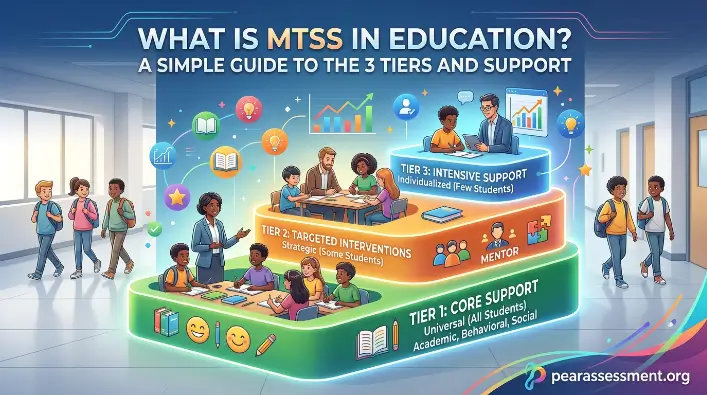
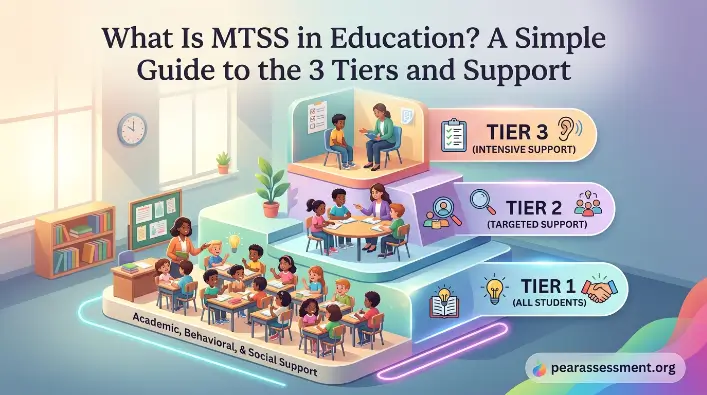
The three tiers of MTSS explain how schools provide different levels of support based on student needs. Tier 1 provides support to all students, Tier 2 offers targeted help to students who need extra assistance, and Tier 3 provides more intensive and individualized support. These levels are flexible, so the amount of support can change as a student’s needs and progress change.
Tier 1: Universal Support for All Students
Tier 1 is the foundation of MTSS and is available to every student. It focuses on strong classroom teaching, reading and math instruction, positive behavior strategies, clear expectations, and social-emotional learning. Schools may also use universal screening to identify students who could need additional help.
The main goal of Tier 1 is to create an effective learning environment that meets the needs of most students. When core instruction is strong, many students can succeed without needing more intensive interventions.
Tier 2: Targeted Support
Tier 2 is designed for students who need more help than they receive through regular Tier 1 instruction. Schools may provide small-group lessons, extra practice, or targeted interventions based on a student’s specific academic or behavioral needs.
Teachers use progress monitoring to check whether the intervention is helping. If the student makes good progress, the extra support may be reduced. If progress remains limited, educators can adjust the intervention or consider a higher level of support.
Tier 3: Intensive Individualized Support
Tier 3 is the most intensive level of MTSS support. It is intended for students with significant or ongoing needs who require more personalized intervention. Support may include one-to-one instruction or very small-group sessions based on specific student goals.
Educators monitor progress closely and adjust the intervention when needed. Tier 3 does not automatically mean that a student has a disability or will receive special education. It simply means the student currently needs more intensive support.
Read Also: Secondary Education: Definition, Levels, Importance and Benefits
How Does MTSS Work in Schools?
MTSS works as a continuous process that helps schools identify student needs, provide suitable support, monitor progress, and make informed decisions. Instead of using the same approach for every student, educators use student data to understand what each learner needs and whether the current support is effective.
Step 1: Screen Students and Identify Needs
Schools may use universal screening, classroom assessments, attendance records, behavior information, and other relevant data to identify students who may need additional support. This helps educators notice concerns early rather than waiting for difficulties to become more serious.
Screening is not intended to label a student. It gives teachers useful information about areas where a student may need help and helps them decide whether additional assessment or intervention is appropriate.
Step 2: Provide Evidence-Based Support
Once a need is identified, educators choose an intervention that matches the student’s specific difficulty. The support should use evidence-based instruction and focus on a clear, measurable need rather than simply giving the student more work.
For example, a student having difficulty with reading may receive targeted phonics instruction or additional reading practice. This type of focused intervention is more useful than assigning extra general homework.
Step 3: Monitor Student Progress
Teachers and support teams regularly check how well the student is responding to the intervention. They may review assessments, work samples, classroom performance, behavior records, or other measures connected to the student’s goals.
Progress monitoring helps educators determine whether the support is actually working. The purpose is not just to collect information but to use that information to make better instructional decisions.
Step 4: Adjust the Level of Support
When a student makes good progress, educators may continue the support or gradually reduce it as appropriate. This allows the student to become more successful with less intensive assistance.
If progress remains limited, the team can change the intervention, increase its intensity, or provide a different level of support. This flexible approach makes MTSS a data-driven system that responds to changing student needs.
What Are the Key Components of MTSS?
A successful MTSS framework brings several connected practices together to provide students with the right support at the right time. These components help schools identify needs early, choose effective interventions, track progress, and work together to improve student outcomes.
Universal Screening and Assessment
Universal screening helps schools identify students who may be experiencing academic, behavioral, or other difficulties. It gives educators an early view of student performance and highlights areas that may need closer attention.
Assessment results can then help teachers understand a student’s strengths and challenges. This information supports better decisions about instruction and whether additional intervention may be needed.
Evidence-Based Instruction and Interventions
MTSS depends on evidence-based practices that have research support and are appropriate for student needs. Schools should select teaching strategies and interventions that are likely to produce meaningful results.
Strong Tier 1 instruction is especially important because it is provided to all students. When core teaching is effective, it can prevent many learning difficulties from becoming more serious.
Progress Monitoring and Data-Based Decisions
Progress monitoring helps educators see whether a student is responding to an intervention. Regular information about student performance allows the team to understand what is working and what may need to change.
Through data-based decision making, schools can continue, adjust, increase, or reduce support based on actual progress. This makes interventions more responsive instead of relying only on assumptions.
Team Collaboration and Family Involvement
MTSS works better when teachers, specialists, school leaders, counselors, and families share information and work toward common goals. Each person may provide a different perspective on the student’s learning, behavior, or progress.
Regular communication helps create a more complete support plan. Family involvement is also valuable because parents and caregivers can share information about the student’s strengths, challenges, and needs outside school.
What Are Examples of MTSS Interventions?
MTSS interventions can vary depending on the student’s needs, grade level, and school resources.
| Area | Example MTSS Support |
| Reading | Small-group reading instruction |
| Math | Targeted math practice |
| Behavior | Check-in/check-out support |
| Social-emotional | Small-group skills instruction |
| Attendance | Individual attendance support |
For example, a student who struggles with reading may receive additional small-group instruction under Tier 2. A student with more intensive needs may receive individualized support under Tier 3.
Behavioral and social-emotional supports can also be included. Federal education guidance describes MTSS as a framework that can address academic, behavioral, social, and emotional needs.
What Is the Difference Between MTSS, RTI, and PBIS?
MTSS, RTI, and PBIS are related terms, but they do not always describe exactly the same thing.
MTSS vs. RTI
Response to Intervention (RTI) traditionally focuses strongly on academic difficulties and providing increasingly targeted academic intervention.
MTSS is generally broader. It can bring together academic, behavioral, social-emotional, and other student supports within one framework. Research literature also describes MTSS as a more comprehensive approach that grew from earlier tiered support models such as RTI and PBIS.
MTSS vs. PBIS
Positive Behavioral Interventions and Supports (PBIS) focuses mainly on improving student behavior through positive, proactive, and evidence-based practices.
PBIS can be used within an MTSS framework, particularly for behavioral support. Federal guidance describes PBIS as an MTSS framework focused on behavior with universal, targeted, and individualized levels of support.
Simple Comparison
| Framework | Main Focus |
| MTSS | Whole-student, multi-area support |
| RTI | Academic intervention and response |
| PBIS | Positive behavior and behavioral support |
What Are the Benefits of MTSS in Education?
MTSS can help schools provide support in a more organized and consistent way.
Key benefits include:
- Earlier identification of student needs
- Faster access to additional support
- More targeted interventions
- Better use of student data
- Stronger collaboration among school staff
- Support for academic and non-academic needs
- More consistent schoolwide practices
- Opportunities to adjust support as student needs change
Another important benefit is prevention. Instead of waiting until a problem becomes severe, schools can identify concerns earlier and provide appropriate support.
However, effective MTSS requires good implementation. Schools need trained staff, useful data, appropriate interventions, time for collaboration, and regular review of student progress.
How Does MTSS Support Special Education?
MTSS can support students with and without disabilities by providing different levels of academic, behavioral, and social-emotional support. It helps schools identify students who are struggling and provide evidence-based interventions before or alongside special education services. This early support can help educators respond to student needs more effectively.
MTSS also gives educators useful information about how a student responds to different interventions. However, MTSS should not be used to delay or deny a proper special education evaluation when a disability is suspected. In simple terms, MTSS and special education can work together, but they have different purposes: MTSS is a broader support framework, while special education provides services for eligible students under applicable education laws.
Common Mistakes Schools Can Make With MTSS
Schools can face challenges when implementing MTSS. Avoiding common mistakes can make the system more effective.
- Treating MTSS as a separate program: MTSS should connect with everyday instruction and schoolwide systems.
- Using weak interventions: Schools should select appropriate evidence-based practices.
- Collecting data without using it: Data should guide real instructional decisions.
- Changing tiers without evidence: Decisions should be based on student needs and progress.
- Focusing only on academics: MTSS can also address behavior and social-emotional needs.
- Leaving families out: Families can provide valuable information about student needs.
- Treating Tier 3 as permanent: MTSS support should remain flexible and respond to changing needs.
The main goal is not simply to move students through three levels. The goal is to provide the right support at the right intensity.
How Can Schools Implement MTSS Effectively?
Schools can build a stronger MTSS framework by following a clear process.
- Build strong Tier 1 instruction and schoolwide supports.
- Establish a consistent universal screening process.
- Clearly define when students need additional support.
- Select interventions that match student needs.
- Set measurable goals.
- Monitor progress regularly.
- Hold support-team meetings to review data.
- Adjust interventions when students are not making enough progress.
- Include families in the support process.
- Review the overall system and improve it over time.
The most important point is consistency. MTSS works as a system when assessment, instruction, intervention, progress monitoring, and decision-making are connected.
Frequently Asked Questions About MTSS
What does MTSS stand for in education?
MTSS stands for Multi-Tiered System of Supports. It is a framework that helps schools provide different levels of academic, behavioral, social-emotional, and other support based on student needs.
What are the three tiers of MTSS?
The three tiers are Tier 1, Tier 2, and Tier 3. Tier 1 provides universal support for all students. Tier 2 provides targeted support for students who need additional help. Tier 3 provides intensive and individualized support.
Is MTSS the same as special education?
No. MTSS is a schoolwide framework that can support all students, including students with disabilities. Special education is a separate system of services governed by specific legal requirements.
What is the difference between MTSS and RTI?
RTI has traditionally focused more on academic intervention and student response to instruction. MTSS generally has a broader focus that can include academic, behavioral, social-emotional, and other areas of student support.
Can a student move between MTSS tiers?
Yes. MTSS is flexible. A student’s level of support can change according to progress and current needs. Students are not necessarily assigned permanently to one tier.
Conclusion
Understanding what is MTSS in education becomes easier when you think of it as a system for matching students with the support they need. Tier 1 provides strong support for everyone, Tier 2 offers targeted help, and Tier 3 provides more intensive individualized intervention.
The strength of MTSS comes from early identification, evidence-based instruction, progress monitoring, and teamwork. Schools can use student data to understand what is working and make changes when needed. When implemented well, MTSS gives educators a practical way to support the whole student while responding to individual needs.