
Meta Description
Understand the key differences between federal and private student loans, including interest rates, eligibility requirements, repayment plans, loan forgiveness options, and protections available to borrowers.
URL Slug
federal-vs-private-student-loans
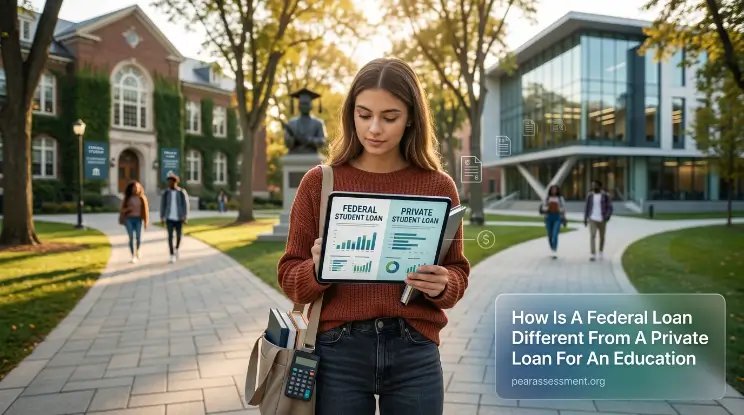
Welcome to Pear Assessment. Paying for college or other forms of higher education can be challenging, especially when scholarships, grants, and personal savings are not enough to cover all expenses. Student loans can help bridge this financial gap by providing funds for tuition, fees, books, and other education-related costs. Understanding how federal and private student loans differ can help students and families make informed borrowing decisions based on their financial needs.
A federal student loan differs from a private student loan in several important ways. Federal student loans are offered through the U.S. federal government, while private student loans are provided by banks, credit unions, and other private lenders. The two types of loans may vary in interest rates, eligibility requirements, repayment plans, forgiveness opportunities, and borrower protections. Knowing these differences can help borrowers choose the type of student loan that best fits their circumstances.
What Is a Federal Student Loan?
A federal student loan is a type of education financing offered through the U.S. federal government to help eligible students and parents cover the cost of higher education. These loans generally include borrower protections and flexible repayment options that can make managing education-related debt more manageable. To apply for federal financial aid, students typically complete the Free Application for Federal Student Aid (FAFSA). Based on their eligibility and financial circumstances, students may qualify for different types of federal student loans.
Direct Subsidized Loans
Direct Subsidized Loans are federal student loans available to eligible undergraduate students who demonstrate financial need. One of their key advantages is that the U.S. government covers the interest during certain qualifying periods, including while the student is enrolled at least half-time and during eligible deferment periods.
In simple terms, borrowers generally do not have to pay the interest that accrues during these qualifying periods. This can help lower the total cost of borrowing and make the loan more affordable over time.
Direct Unsubsidized Loans
Direct Unsubsidized Loans are federal student loans available to eligible undergraduate, graduate, and professional students. Unlike Direct Subsidized Loans, these loans do not require students to demonstrate financial need, making them a useful option for borrowers who need additional education funding but do not qualify for subsidized loans.
The key difference is that the borrower is responsible for the interest from the date the loan is disbursed. Interest may continue to accrue while the student is enrolled in school, during the grace period, and through certain periods of deferment or forbearance. Students can choose to pay the accruing interest while they are in school, which may help prevent the interest from being added to the loan balance and reduce the overall cost of borrowing.
PLUS Loans
PLUS Loans are federal student loans available to eligible graduate or professional students and parents of dependent undergraduate students. They are intended to help cover remaining education costs after scholarships, grants, savings, and other forms of financial aid have been considered.
Unlike Direct Subsidized and Direct Unsubsidized Loans, PLUS Loans can help cover a larger share of the remaining cost of an eligible education program. For instance, a parent may use a Parent PLUS Loan to help pay for a dependent student’s tuition, fees, room and board, books, and other qualifying education expenses.
What Is a Private Student Loan?
Private student loans generally require a credit check, and lenders may review the borrower’s credit history and financial profile when determining eligibility and loan terms. Students with limited credit history or lower credit scores may need a cosigner to qualify or potentially receive more favorable loan terms.
- Definition of a private student loan
- Banks, credit unions, and other private lenders
- How private loan terms are determined
- Role of credit history and cosigners
- When students may consider private loans
Private lenders generally determine rates and terms based on factors such as credit history, and students may need a cosigner.
Read Also: Art Education: Importance, Benefits, and Career Paths
Federal vs. Private Student Loans: Key Differences
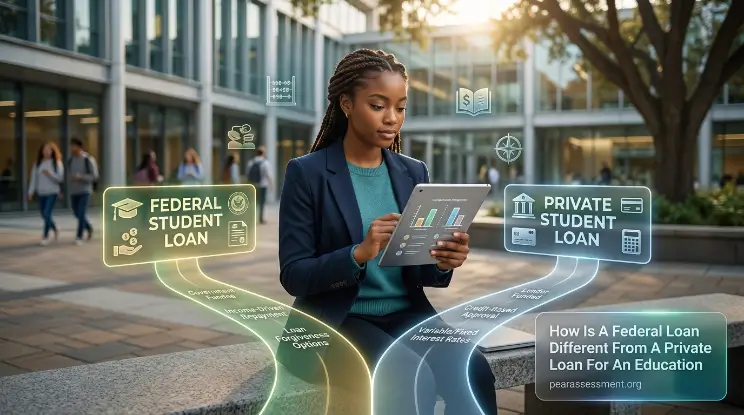
Federal and private student loans can both help students cover the cost of higher education, but they differ in several important ways. Federal student loans are provided through the U.S. federal government, while private student loans are offered by banks, credit unions, and other private lenders.
| Feature | Federal Student Loan | Private Student Loan |
| Lender | Federal government | Bank, credit union, or private lender |
| Interest rate | Generally fixed | Fixed or variable |
| Credit check | Usually not required for student loans | Generally required |
| Cosigner | Usually not required | Often required |
| Repayment options | More flexible | Varies by lender |
| Income-driven repayment | Available for eligible federal loans | Generally unavailable |
| Forgiveness programs | Some programs available | Generally not available |
| Borrower protections | More extensive | Varies by lender |
| Loan limits | Set by federal program | Varies by lender |
The biggest differences involve how the loans are offered and how borrowers repay them. Federal student loans generally provide more flexible repayment options and stronger borrower protections, while private loans are controlled by the individual lender.
Why Are Federal Student Loans Usually Preferred?
Federal student loans are often considered before private student loans because they generally provide fixed interest rates, flexible repayment options, and stronger borrower protections. These features can make it easier for students to manage their debt while in school and after graduation.Another key benefit is that eligible federal borrowers may have access to options such as income-driven repayment plans, deferment, forbearance, and certain loan forgiveness programs. These programs may provide additional flexibility when borrowers experience financial difficulties or have trouble making their monthly payments.
Fixed Interest Rates
Federal student loans generally come with fixed interest rates, meaning the rate is established when the loan is issued and typically remains unchanged throughout the repayment period. This stability can make it easier for borrowers to estimate their monthly payments and understand the potential cost of the loan over time.
For example, if a federal student loan carries a fixed interest rate of 6%, the rate generally stays at 6% even if market interest rates increase or decrease. While monthly payments may vary under certain repayment plans, the interest rate itself does not change because of fluctuations in the market.
Flexible Repayment Options
Federal student loans may offer multiple repayment options to eligible borrowers, providing greater flexibility when managing monthly payments. Certain federal repayment plans can consider factors such as the borrower’s income and family size, which may help make payments more affordable when income is limited.
For example, a borrower may have a lower-than-expected income after graduating. If they qualify for an income-driven repayment plan, their monthly payment may be adjusted based on their financial circumstances instead of being determined solely by the original loan balance.
Loan Forgiveness and Other Protections
Some federal student loan borrowers may qualify for loan forgiveness programs if they meet specific eligibility requirements. Loan forgiveness generally means that some or all of an eligible remaining loan balance may be canceled after the borrower fulfills the conditions of the applicable program. Eligibility can depend on factors such as the type of federal loan, employment, repayment history, and other program-specific requirements.
Federal student loans may also offer borrower protections and assistance options that can help eligible borrowers manage their debt during periods of financial difficulty. Depending on their circumstances, borrowers may have access to options such as deferment, forbearance, or certain repayment plans that can temporarily reduce, adjust, or pause payments.
When Might a Private Student Loan Make Sense?
A private student loan may be an option when federal financial aid, scholarships, grants, savings, and other available resources are not enough to cover the total cost of education. Private loans can help bridge the remaining funding gap for expenses such as tuition, books, housing, and other eligible education costs.
- Federal aid does not cover the full education cost
- Borrower has strong credit
- Private lender offers favorable terms
- Borrower compares multiple lenders
- Borrower understands the repayment terms
Private loans should generally be considered carefully because they may not provide the same repayment flexibility and federal protections available with federal student loans.
How to Choose Between a Federal and Private Education Loan
Choosing between a federal and private student loan involves more than comparing the advertised interest rate. A loan with a lower rate may not always be the better option if it comes with higher fees, limited repayment flexibility, or fewer borrower protections.
Start With Federal Financial Aid
Before taking out a private student loan, students should first explore available federal financial aid options. This typically begins with completing the Free Application for Federal Student Aid (FAFSA), which helps determine eligibility for federal grants, work-study opportunities, and federal student loans.
Students should carefully review their complete financial aid package and consider grants and scholarships first, as these forms of aid generally do not need to be repaid. Exploring these options before borrowing can help reduce the amount of student loan debt needed to pay for education.
- Complete the FAFSA
- Review federal loan eligibility
- Consider grants and scholarships first
Federal financial aid should generally be reviewed before turning to private student loans. Grants and scholarships can help reduce the amount that needs to be borrowed.
Compare the Total Cost
When selecting an education loan, borrowers should look beyond the interest rate and consider the loan’s overall cost. This includes the amount borrowed, interest that accrues over time, applicable fees, and the total amount that will need to be repaid.
A loan with a lower interest rate may not always be the least expensive option if it comes with additional fees or a longer repayment period. Borrowers should also evaluate the expected monthly payment and the total time required to repay the loan to determine whether it fits their financial situation.
- Interest rate
- Fees
- Monthly payment
- Total repayment amount
A loan with a lower advertised rate is not necessarily the cheapest option. Compare the complete cost of borrowing and determine how much will need to be repaid over the entire loan term.
Check Repayment Flexibility
Before selecting an education loan, borrowers should carefully review the repayment options and flexibility available. Repayment terms determine when payments begin, how monthly payments are calculated, and what assistance may be available if the borrower experiences financial difficulties later.
Federal student loans may offer several repayment options for eligible borrowers, including plans that can adjust payments based on factors such as income and family circumstances. Depending on the borrower’s situation and eligibility, additional options may include deferment, forbearance, or certain loan forgiveness programs.
- Income-based options
- Deferment
- Forbearance
- Forgiveness eligibility
Federal loans may provide repayment features and protections that can be important if your financial circumstances change after graduation.
Common Mistakes to Avoid When Borrowing for Education
Taking out a student loan is a significant financial decision, so borrowers should carefully understand the loan terms, costs, and repayment responsibilities before agreeing to the loan. Borrowing more than necessary can lead to higher monthly payments and additional financial pressure after graduation.
- Choosing a private loan before checking federal options
- Focusing only on the advertised interest rate
- Borrowing more than necessary
- Ignoring variable interest rates
- Not reading cosigner requirements
- Failing to compare repayment terms
- Assuming private loans have the same protections as federal loans
Avoiding these mistakes can help borrowers make a more informed decision and potentially reduce the cost and difficulty of repaying education debt.
Frequently Asked Questions
Is a federal student loan better than a private student loan?
Federal student loans are often preferred because they generally provide more flexible repayment options and stronger borrower protections. However, the best option depends on the borrower’s circumstances and eligibility.
Do private student loans require a cosigner?
Many private student loans may require or benefit from a cosigner, especially when the student has limited credit history or does not meet the lender’s credit requirements.
Can federal student loans have variable interest rates?
Federal student loans generally have fixed interest rates, meaning the rate does not change during the life of the loan.
Can private student loans qualify for federal forgiveness programs?
Private student loans generally do not qualify for federal student loan forgiveness programs because they are not federal loans.
Should I use federal loans before private loans?
In general, students should review federal financial aid options before considering private student loans. Federal loans generally offer more borrower protections and repayment flexibility.
Conclusion
Understanding how a federal loan differs from a private loan for education can help students and families make more informed borrowing decisions. Federal student loans are provided through the federal government and generally offer fixed interest rates, flexible repayment options, and stronger borrower protections.
Private student loans are offered by banks, credit unions, and other private lenders. They can help cover remaining education expenses when other financial aid is not sufficient, but their interest rates, repayment terms, fees, and borrower protections can vary by lender. Before taking out a loan, borrowers should compare the total cost, repayment options, and terms carefully, while considering available federal loan options first.