

A great exit ticket takes three minutes to answer and thirty seconds to design — once you have good models. This collection of exit ticket examples for students gives you ready-to-use questions, prompts, and formats for every subject, plus creative and digital twists for when the routine starts feeling stale. If you’re new to the strategy, our guide to what an exit ticket is explains the foundations; here we go straight to the examples. Steal them verbatim, adapt the stems to your content, and you’ll never stare at a blank plan book again.
fun exit ticket questions
Fun exit ticket questions earn engagement without sacrificing evidence. The trick is a playful frame around a serious check:
- Teach the alien: “Explain today’s idea as if I just landed from another planet and know nothing.”
- Text it: “Write today’s main idea as a text message to a friend who was absent — under 30 words.”
- Emoji review: “Pick an emoji for your understanding today and explain your choice in one sentence.”
- Headline writer: “Write a newspaper headline for today’s lesson.”
- Two truths and a lie: “Write two true statements and one false statement about today’s topic; star the lie.”
- Dear future me: “Write one thing future-you needs to remember for the test.”
- Exit interview: “If today’s concept were a person, what question would you ask it?”
Use one fun format a week — Friday is the natural slot — so the novelty stays fresh and students keep answering the serious daily questions seriously.
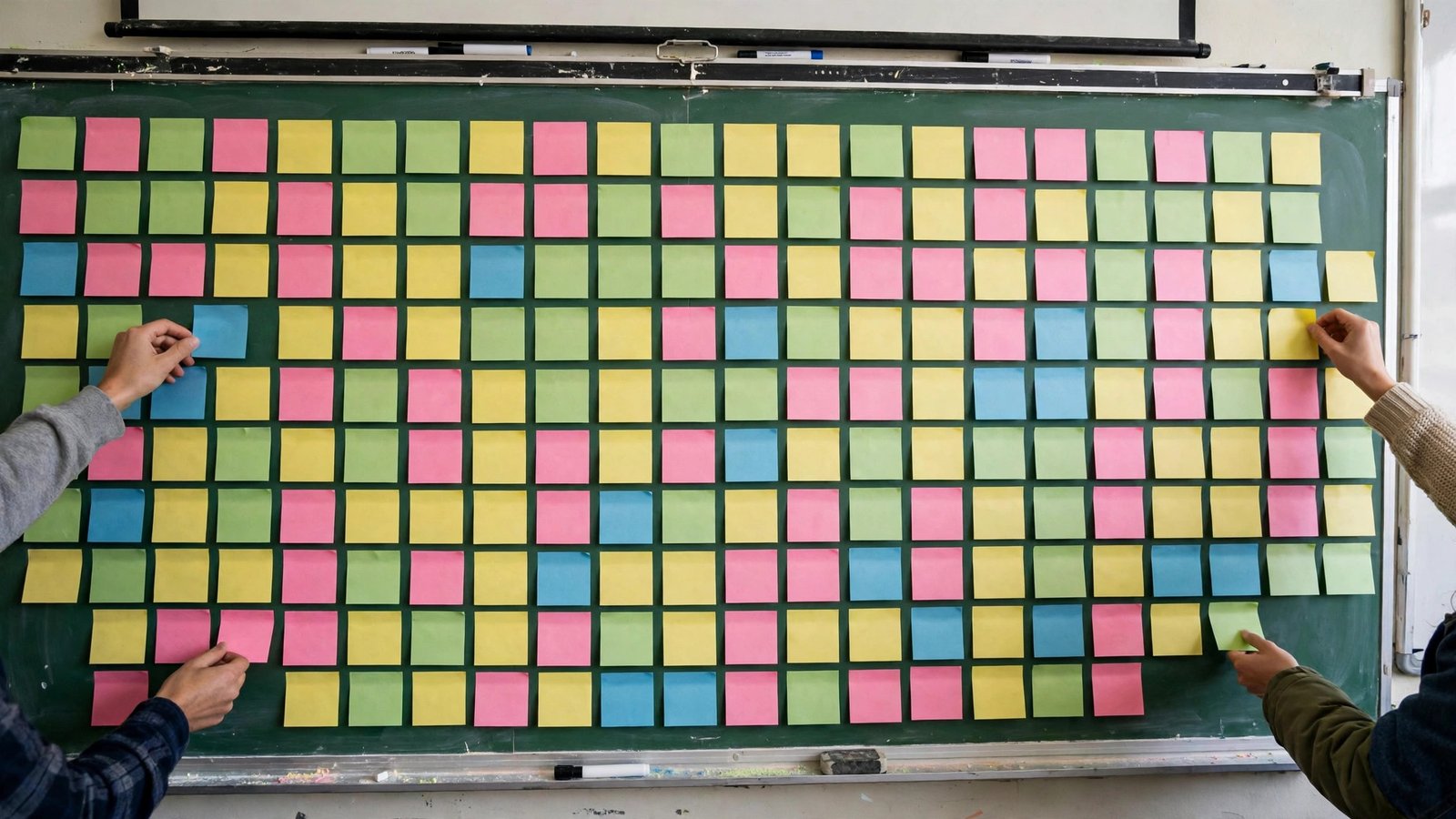
exit ticket questions for students
The workhorse exit ticket questions for students are short stems that adapt to any content. Keep a bank of these taped inside your planner:
- “What is the most important idea from today’s lesson, in your own words?”
- “Explain how to [solve/say/do today’s skill] to a student who missed class.”
- “What is one question you still have about today’s lesson?”
- “Rate your confidence 1–4 and explain your rating in one sentence.”
- “What mistake do students most often make with this topic, and how can it be avoided?”
- “Give an example of today’s concept that we did NOT use in class.”
- “What part of today’s lesson would you teach differently, and why?”
- “Connect today’s idea to something we learned earlier this year.”
Match the stem to your purpose: the first two verify the objective, the middle ones expose misconceptions and confidence, and the last two build transfer and metacognition. Rotate stems so the same thinking isn’t rehearsed into autopilot.
examples of exit tickets in the classroom
Subject-specific examples of exit tickets in the classroom show the routine at working strength:
- Math: “Solve: 3(x − 2) = 15. Then write one sentence about the mistake a student might make on the first step.” (You learn who can solve and who understands the method.)
- ELA: “Underline the strongest evidence in today’s paragraph — yours or the model’s — and write why it works in one sentence.”
- Science: “A plant in a dark room stops growing. Use today’s lesson to explain why, naming the process involved.”
- Social studies: “Was the treaty a success? Answer in two sentences, citing one piece of evidence from today’s documents.”
- World languages: “Write three sentences about your weekend using today’s tense. Circle the verb endings.”
- Elementary: “Draw today’s number bond for 8, then write the matching addition sentence.”
Notice the pattern: each example demands production, not recognition, and each wrong answer points at a specific gap you can name before tomorrow.
What you do in the ten minutes after collecting them matters as much as the prompt. Sort responses into three piles — got it, getting there, not yet — and count them rather than grading them. A stack of “not yet” answers above a third of the class means tomorrow opens with a reteach, ideally using a different example or representation than today’s. A thin “not yet” pile becomes a small-group list. And start tomorrow by showing two anonymous answers — one strong, one with the day’s common error — and fixing the error together. Students who watch their tickets change the next lesson write better tickets; it is the fastest culture upgrade the routine offers.

exit ticket samples
Full exit ticket samples show how the pieces combine. Sample 1 (grade 7 math, proportional relationships): Q1: “A recipe uses 2 cups of flour for 12 cookies. How much flour for 30 cookies? Show your method.” Q2: “Confidence 1–4?” Q3 (optional): “What is still fuzzy?” Sample 2 (grade 5 ELA, main idea): “Write the main idea of today’s passage in 12 words or fewer. Then copy the sentence that best supports it.” Sample 3 (grade 10 biology, cellular respiration): “A sprinter’s muscles ache after a race. Explain, using fermentation, why — in three sentences or fewer.” Sample 4 (grade 3, any subject): a printed slip with three faces (confident / unsure / lost) to circle, plus one line: “Today I learned ______.” Each sample takes under four minutes, sorts fast, and targets one named skill. For the step-by-step of running them inside a platform, see our guide to exit tickets in Pear Assessment.
creative exit tickets
Creative exit tickets break the paper routine while keeping the evidence:
- Sketch it: students draw the concept as a labeled diagram, flowchart, or comic strip frame.
- One-word summary plus defense: one word that captures the lesson — then two sentences defending the choice. (The defense is the assessment.)
- Postcard home: “Write a postcard to your family explaining today’s lab as if it were a trip.”
- Tweet thread: three connected “posts” summarizing the argument of the lesson, each under 280 characters.
- Socratic sticky: students write their best discussion question for tomorrow, and tomorrow’s warm-up uses the top three.
- Color code: students highlight their notes — green for “I can teach this,” yellow for “shaky,” pink for “lost” — and you scan the room’s colors as they leave.
Creative formats suit Fridays, review days, and classes whose written output you already sample heavily elsewhere in the week.
digital exit ticket ideas
Digital exit ticket ideas trade paper friction for instant data:
- One-question form: a two-field form (answer + confidence) whose responses graph themselves by morning.
- Auto-graded mini-quiz: three questions in your assessment platform, sorted by item before you’ve finished your coffee — the workflow matters more than the tool, and platforms with item analysis make the sorting automatic.
- Interactive slide exit: the final slide of the day’s deck asks the ticket question, so responses land inside the lesson tool you already use.
- Discussion board ticket: students post their answer and reply to one classmate’s, adding a peer layer for homework-length tickets.
- Audio ticket: a 30-second voice note explaining the concept — superb for language classes and reluctant writers.
Digital’s real advantage is the record: a semester of tickets becomes searchable evidence of growth, and recurring wrong answers from the same student surface as patterns instead of surprises.

ai exit ticket generator
An AI exit ticket generator drafts questions from your lesson content — paste the day’s objective, a passage, or your slide text, and the tool proposes ticket questions at several difficulty levels, often with answer keys and common wrong answers attached. Used well, this cuts design time from ten minutes to two and is especially helpful for writing distractors that expose misconceptions. Pear Assessment’s AI features, covered in our guide to Pear Assessment AI features, let teachers generate and refine items inside the same platform that delivers them.
Used carelessly, AI generation produces generic recall questions with implausible distractors. Keep the human in the loop: check that the correct answer is actually correct, that each wrong option maps to a real misconception your students have, and that the reading level fits your class. AI drafts; you diagnose. The last step — deciding what tomorrow’s lesson does with the results — stays stubbornly, wonderfully human. For a balanced research view of these tools, Edutopia’s formative assessment resources are worth browsing.
what are good exit ticket prompts to end a lesson with
Teachers asking what are good exit ticket prompts to end a lesson with usually need prompts that end the learning, not just the period. The strongest closers share three traits: they make students retrieve (not recognize) the day’s idea, they are answerable in under four minutes by a student who was present, and they produce answers you can sort at a glance. Reliable closers:
- “Today in one sentence: ______.”
- “The muddiest point for me is ______ because ______.”
- “If the test had one question from today, it would be ______. My answer: ______.”
- “Before today I thought ______. Now I think ______.”
- “Teach it back: explain today’s skill to a 10-year-old in three sentences.”
- “One thing I can now do that I couldn’t this morning: ______.”
End with the same prompt often enough that students start composing their answers during the lesson — that’s not gaming the system; that is the system working.

Frequently asked questions
How many questions should an exit ticket have?
One to three. One content question is the core; add a confidence rating and an optional “still confused about” line if you want the full picture.
What are the best exit ticket prompts for math?
A single worked problem plus “explain the first step” or “name the common mistake.” The explanation item is where the diagnostic value lives.
Can exit tickets work in kindergarten or first grade?
Yes — drawing responses, circling a face scale, or dictating one sentence to the teacher all work. The routine’s habits (pause, reflect, report) are being taught along with the content.
How do I stop students from copying each other?
Two versions of the question, simultaneous digital submission, and a culture where honest “I’m lost” answers visibly earn help rather than judgment. Copying fades when the ticket’s purpose is clear.
What is the best exit ticket format for a substitute teacher day?
A printed sample with the content question already written, the three-pile sorting instructions on the back, and a confidence scale students can’t get wrong. Leave two versions if the class is tempted to copy, and ask the sub to note which pile looked biggest — you’ll get a usable signal from a day you weren’t there.
The bottom line
Good exit tickets are a wardrobe, not a uniform: a few reliable stems for daily use, a fun format for Fridays, a digital option when you want the data sorted for you, and AI assistance when design time is short. Build your bank from the examples above, adapt them to your content, and the last three minutes of class will start paying rent.