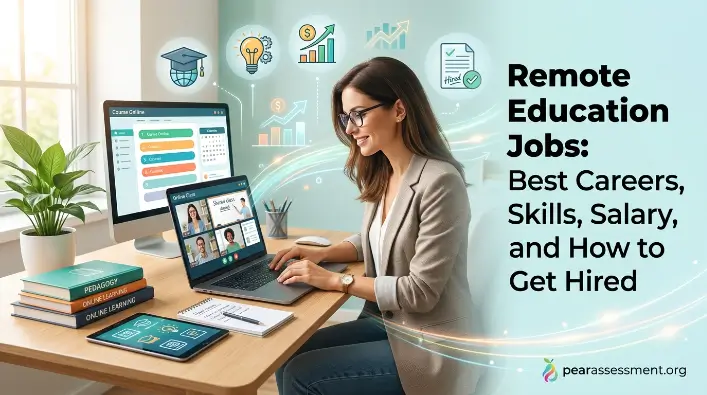
Welcome to Pear Assessment. Remote education jobs allow teachers, tutors, curriculum specialists, and other education professionals to work outside a traditional classroom. These jobs allow professionals to teach students, create online courses, develop learning materials, provide academic support, or work in instructional design. Depending on the role, professionals may work with schools, colleges, education companies, or online learning platforms.
Remote education is not limited to teachers. People with experience in online learning, curriculum development, educational technology, communication, and student support can also find different career opportunities. Some positions are full-time, while others are part-time, contract, or freelance. The right role depends on your education, skills, previous experience, and long-term career goals.
What Are Remote Education Jobs?
Remote education jobs are positions where education-related work is completed mainly from a home office or another remote location instead of a traditional classroom. These jobs can be full-time, part-time, contract, or freelance. Some professionals work directly with students through a virtual classroom, while others create courses, develop learning materials, provide student support, or manage learning management systems. However, remote does not always mean working from anywhere, as some employers may have state, country, or licensing requirements.
Who Can Work in Remote Education?
Remote education careers can be suitable for professionals with different backgrounds, including:
- Certified teachers: Teach students through virtual schools or online programs.
- Tutors and subject specialists: Provide online academic or subject-specific support.
- College instructors: Teach courses through colleges and universities online.
- Instructional designers: Create online learning courses and digital learning experiences.
- Curriculum developers: Develop lessons, course materials, and educational programs.
- Education administrators: Handle student services, programs, or education operations remotely.
- EdTech professionals: Work with educational technology, platforms, and digital learning tools.
- Career changers: Use skills such as communication, writing, training, or technology to enter education-related roles.
The best remote education job depends on your qualifications, experience, technical skills, and preferred type of work.
Read Also: What Is MTSS in Education? A Simple Guide to the 3 Tiers and Support
Best Types of Remote Education Jobs
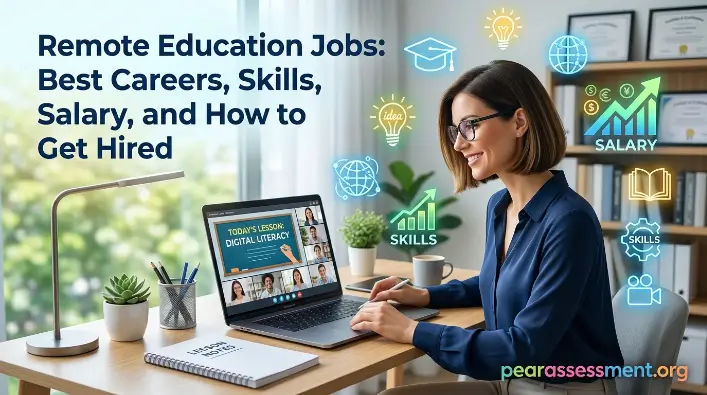
There are many types of remote education jobs, and they are not limited to online teaching. Some professionals work directly with students, while others create courses, develop curriculum, design digital learning experiences, or support educational technology. The right role depends on your qualifications, experience, technical skills, and whether you prefer working with students or focusing on educational content and systems.
Online Teacher and Virtual School Teacher
Online teachers and virtual school teachers provide lessons through video platforms and other digital tools. Their responsibilities can include:
- Preparing and delivering online lessons
- Checking student progress and assignments
- Communicating with students and parents
- Managing virtual classroom activities
These roles can be full-time or part-time, depending on the school or platform. K–12 teaching positions may require a state teaching license, so applicants should check the requirements for the specific location and employer.
Online Tutor and Subject Specialist
Online tutors help students improve their knowledge in subjects such as mathematics, science, English, languages, and test preparation. Unlike classroom teachers, tutors often work with individual students or small groups, allowing them to provide more personalized support.
Many tutoring roles are part-time, freelance, or flexible. Strong subject knowledge, patience, communication, and student engagement skills are important, while previous teaching experience can be helpful but is not always required.
Online College Instructor and Adjunct Faculty
Online college instructors teach courses through universities, colleges, and other higher education institutions. They may prepare lessons, grade assignments, lead discussions, provide feedback, and communicate with students through digital platforms.
Requirements depend on the institution and subject. Advanced or specialized courses often require a graduate degree, while relevant professional experience can also be important for certain fields.
Instructional Designer
Instructional designers create online courses and digital learning experiences. Instead of teaching a class every day, they focus on making educational content organized, interactive, and easy to understand. They may work with teachers, subject experts, and technology teams.
Common responsibilities include:
- Designing online courses
- Creating learning activities and assessments
- Organizing educational content
- Applying instructional design principles
- Using learning management systems
This career can be a good choice for teachers who enjoy technology, course creation, and educational planning.
Curriculum Developer and Course Developer
Curriculum and course developers create educational programs, lesson materials, assessments, and digital resources. Their goal is to make learning content accurate, useful, and aligned with specific learning objectives.
This role is suitable for professionals who enjoy curriculum development, research, writing, and educational planning. Experienced teachers can often transfer their lesson-planning and subject knowledge into this type of remote career.
Education Support and EdTech Roles
Remote education also includes positions that support students, teachers, and education companies without requiring traditional classroom teaching. Examples include:
- Academic support specialist
- Student success specialist
- Education content specialist
- Learning technology specialist
- Course support specialist
- EdTech customer success specialist
These roles can suit professionals with education, communication, organization, or technology skills. They are especially useful for people who want to work in the education industry while focusing more on support, technology, or digital learning than direct teaching.
Remote Education Jobs by Experience Level
Remote education jobs are available at different career stages, from beginner-friendly tutoring and support positions to advanced roles in instructional design, education consulting, and program management. While entry-level jobs may focus more on basic skills and potential, specialized positions usually require stronger qualifications, relevant experience, and a proven record of results.
Entry-Level Remote Education Jobs
Beginners can start with roles that allow them to build practical experience while developing their remote work skills. Common options include:
- Online tutoring
- Teaching assistant roles
- Education support positions
- Educational content work
- Entry-level course support
- Freelance education work
Tutoring, volunteer projects, and small freelance assignments can help beginners gain experience and create stronger examples for their resume.
Mid-Level Remote Education Careers
Professionals with several years of education experience can move into more specialized positions. These may include online teaching, curriculum development, instructional design, academic advising, course development, and education program coordination.
At this stage, employers usually want more than basic qualifications. They may look for measurable results, experience with online learning tools, project experience, and the ability to work independently.
Advanced Remote Education Roles
Experienced professionals can pursue senior positions that involve greater responsibility, strategy, and decision-making. Examples include:
- Senior instructional designer
- Learning experience designer
- Education consultant
- Program manager
- Senior curriculum specialist
- Education leadership roles
These positions often require specialized knowledge, strong communication, project management skills, and experience handling complex educational programs or teams.
Qualifications and Skills You Need for Remote Education Jobs
The qualifications for remote education jobs depend on the specific position. A virtual teacher may need a teaching license, while an instructional designer may need experience with digital learning and a strong portfolio. Employers may also consider your previous experience, subject knowledge, technical abilities, and communication skills when deciding whether you are suitable for a remote role.
Education and Certification Requirements
Different education careers have different qualification requirements. Some roles accept a bachelor’s degree and relevant experience, while advanced teaching, higher education, or specialized positions may require a master’s degree or professional certification.
Common requirements include:
- Bachelor’s or master’s degree
- Teaching license or certification
- Subject-specific qualifications
- Relevant professional certifications
- Previous education or teaching experience
Teaching certification requirements in the U.S. are generally handled by individual states, so there is no single license that automatically applies everywhere. For example, the Bureau of Labor Statistics reports that instructional coordinator positions typically require a master’s degree and related experience.
Technical Skills
Remote education professionals need to be comfortable using digital tools because most communication, teaching, and course management happens online. You do not need to master every platform, but you should understand the tools commonly used in your target position.
Useful technical skills include:
- Video conferencing platforms
- Learning management systems
- Online assessment tools
- Google Workspace and Microsoft Office
- Digital presentation tools
- Virtual classroom technology
For example, an online teacher may need video and classroom software, while an instructional designer may need stronger knowledge of e-learning platforms and course-authoring tools.
Soft Skills Employers Want
Technical knowledge alone is not enough for remote work. Employers also value people who can communicate clearly, stay organized, and complete tasks without constant supervision. Strong communication skills are particularly important when working with students, parents, teachers, or remote teams.
Important soft skills include:
- Organization and time management
- Adaptability and problem-solving
- Collaboration
- Self-motivation
- Clear communication
- Student engagement
These skills help remote professionals manage their workload, meet deadlines, solve problems independently, and maintain positive communication in a digital work environment.
How Much Do Remote Education Jobs Pay?
There is no single salary for remote education jobs. Pay depends on the role, experience, employer, location, education level, and employment arrangement.
Factors That Affect Remote Education Salaries
Important factors include:
- Job title
- Professional experience
- Degree and certification
- Subject specialization
- Employer type
- Full-time or part-time status
- Contract or freelance arrangement
- Geographic location
For example, a private tutor and a senior instructional designer may both work remotely but have very different compensation structures.
Salary Differences by Job Type
| Job Type | Typical Work Arrangement | Main Qualification |
| Online Tutor | Part-time/Freelance | Subject expertise |
| Virtual Teacher | Full-time/Contract | Teaching credentials often required |
| Adjunct Instructor | Part-time | Advanced degree often preferred |
| Instructional Designer | Full-time/Contract | Instructional design experience |
| Curriculum Developer | Full-time/Freelance | Curriculum expertise |
| EdTech Specialist | Full-time/Contract | Education and technology skills |
For a useful benchmark, the BLS reports a median annual wage of $74,720 for instructional coordinators in May 2024. This is an occupation-wide figure, not a guaranteed remote salary.
How to Find Legitimate Remote Education Jobs
Finding legitimate remote education jobs requires more than searching for general work-from-home opportunities. Start by identifying the type of education role you want, then search on trusted job platforms and official employer websites. Using specific job titles can help you find more relevant openings and avoid unrelated results.
Where to Search
You can find remote education opportunities through several reliable sources, including:
- General job boards
- Education-specific job websites
- University career pages
- Virtual school websites
- EdTech company career pages
- Professional networking platforms
- Official employer websites
University and company career pages are especially useful because you can compare the listing with the employer’s official information before applying.
Search With the Right Job Keywords
Use specific terms based on the position you want. For example:
- “remote teacher”
- “virtual teacher”
- “online instructor”
- “remote instructional designer”
- “remote curriculum developer”
- “remote education specialist”
- “online tutor”
- “remote learning designer”
Specific searches usually provide better results than using only remote education jobs because they target a particular career path and reduce unrelated listings.
Verify Every Employer Before Applying
Always check an employer before sharing personal information. Visit its official website, confirm that the position appears on the company’s careers page, and research the organization and application process.
Be especially careful if a recruiter asks for upfront payment, promises unusually high earnings for little work, or requests sensitive financial information before a legitimate hiring process begins. A genuine employer should not ask you to pay money simply to get a job.
How to Get Hired for Remote Education Jobs
Getting hired for remote education jobs can be competitive because many professionals want the flexibility of working from home. A strong application should clearly show your relevant experience, digital skills, and ability to work independently. Instead of applying to every opening, focus on positions that closely match your background and demonstrate how your skills can help the employer.
Build a Remote-Friendly Resume
Your resume should focus on skills and results that are relevant to remote education work. Rather than simply listing your responsibilities, show what you achieved in previous roles.
Useful areas to highlight include:
- Online teaching or training experience
- Digital education tools and LMS knowledge
- Student or learning outcomes
- Curriculum development
- Communication and collaboration
- Remote work experience
- Measurable achievements
For example, instead of writing “taught students online,” mention a specific result, such as improving student performance or successfully delivering an online course.
Create a Strong Online Portfolio
An online portfolio can make your application stronger, especially for instructional design, curriculum development, and educational content roles. It gives employers a direct example of how you plan lessons, organize information, and create learning materials.
A simple portfolio can include:
- Sample lesson
- Online course module
- Curriculum map
- Assessment
- Instructional video
- Learning activity
Keep the portfolio focused on your best and most relevant work rather than adding too many unrelated examples.
Tailor Applications to the Job Description
Avoid sending the same resume and cover letter to every employer. Read each job description carefully and identify the qualifications, technical skills, experience, and repeated keywords that match your background.
Then adjust your application naturally around those requirements. This makes it easier for employers to see why you are a suitable candidate for the specific remote education job.
Prepare for Remote Interviews
Remote interviews also test how comfortably you communicate and work with digital tools. Before the interview, check your equipment and prepare examples that show your ability to manage work independently.
Keep these basics in mind:
- Test your microphone, camera, and internet.
- Choose a quiet, professional space.
- Prepare examples of online collaboration.
- Be ready to discuss student engagement.
- Explain how you manage deadlines and independent tasks.
A confident, well-prepared interview can show employers that you can remain productive and communicate effectively in a remote environment.
Can Teachers Get Remote Jobs Without Leaving Education?
Yes, teachers can move into remote education jobs without completely leaving the education field. Their classroom experience already provides useful skills such as communication, lesson planning, assessment, organization, problem-solving, and learner engagement. These skills can be adapted to different remote roles depending on the teacher’s interests and experience.
Teachers can explore options such as:
- Instructional design
- Curriculum development
- Online tutoring
- Student support
- Education content creation
- Course development
- Learning and development
- EdTech roles
The key is to present existing experience in a way that matches the target position. For example, a teacher applying for an instructional design role should highlight course creation, learning objectives, digital tools, and assessment development instead of focusing mainly on classroom management. This makes their teaching background more relevant to the new remote career.
Common Mistakes to Avoid When Applying for Remote Education Jobs
Applying to Every Remote Job
Applying to hundreds of unrelated jobs can waste time. Choose positions that match your experience and build applications around those roles.
Using the Same Resume Everywhere
A teaching resume and an instructional design resume should not look exactly the same.
Highlight the skills that matter most to each employer.
Ignoring Location and Licensing Requirements
Some remote education jobs still have geographic restrictions. Teaching licenses can also be state-specific in the U.S.
Always read the complete job description before applying.
Underestimating Portfolio Requirements
Some education roles are skills-based. A portfolio can help employers see what you can actually create.
This is particularly useful for instructional design, curriculum development, and educational content positions.
Falling for Remote Job Scams
Common warning signs include:
- Requests for payment
- Guaranteed high income with little work
- Pressure to act immediately
- Unverified recruiters
- Requests for banking information too early
- Job descriptions with vague responsibilities
If something feels suspicious, verify the employer independently before continuing.
Tips for Building a Long-Term Remote Education Career
A remote career becomes stronger when you develop specialized skills instead of relying only on general teaching experience.
Consider these strategies:
- Develop expertise in a specific subject.
- Learn modern educational technology.
- Build an online portfolio.
- Continue professional development.
- Network with education professionals.
- Track measurable career achievements.
- Learn basic instructional design principles.
- Understand digital learning trends.
- Use freelance projects to build experience.
You can also combine education knowledge with technology, writing, project management, or business skills. This can create more career options as your experience grows.
Frequently Asked Questions
What equipment is usually needed for a remote education job?
Most roles require a reliable computer, stable internet connection, webcam, microphone, and a quiet workspace. Some employers may also require specific software or educational platforms.
Can remote education jobs offer flexible working hours?
Yes, flexibility depends on the position. Tutoring and freelance roles often offer more control over schedules, while schools and universities may require fixed teaching or meeting hours.
Do remote education jobs provide employee benefits?
Full-time positions may offer benefits such as health insurance, paid leave, retirement plans, or professional development. Freelance and contract roles usually have fewer employer-provided benefits.
How can I stay productive while working in remote education?
Create a consistent work schedule, organize tasks by priority, reduce distractions, and keep regular communication with students or team members. A dedicated workspace can also help maintain focus.
Can remote education work lead to career advancement?
Yes. Professionals can move from entry-level positions into specialized or senior roles by gaining experience, developing new digital skills, and building expertise in areas such as learning technology, course development, or education management.
Conclusion
Remote education jobs offer many ways to build a flexible career without working in a traditional classroom. Teachers can explore online teaching, tutoring, curriculum development, instructional design, course creation, student support, and EdTech roles. Each path has different requirements, so it is important to choose a position that matches your skills, experience, and career goals. A strong resume, useful digital skills, and a focused portfolio can help you stand out from other applicants.
Building a successful remote education career takes time and consistent effort. Start with roles that match your current qualifications, then improve your skills as you gain experience. Always research employers before applying and avoid suspicious job offers. With the right preparation, practical experience, and a willingness to learn, remote education jobs can become a reliable path for long-term professional growth.