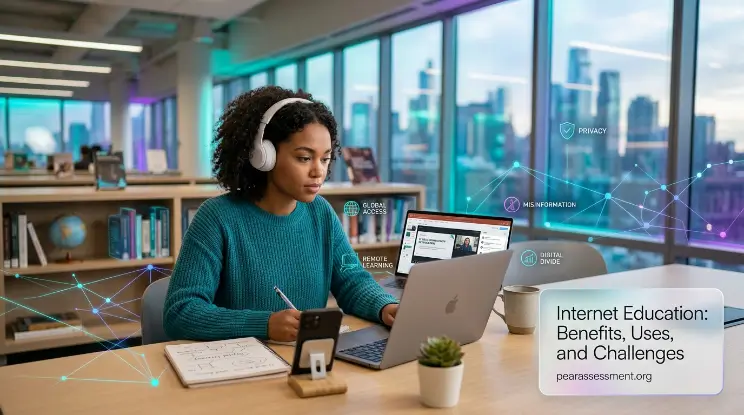
Welcome to Pear Assessment. The internet has transformed the way students, teachers, and parents learn, communicate, and access educational information. Today, learners are no longer limited to traditional classrooms and printed textbooks. They can explore online educational resources, attend virtual classes, enroll in online courses, and communicate with teachers from almost anywhere.
Internet education offers greater flexibility, convenience, and access to learning opportunities. At the same time, it can present challenges such as limited internet connectivity, online distractions, unreliable information, and digital safety risks. Understanding the benefits, uses, limitations, and challenges of internet education can help students and teachers make better use of online tools and create a more effective learning experience.
What Is Internet Education?
Internet education refers to learning and teaching activities that use the internet to deliver educational content, support communication, and provide learning opportunities. It enables students to access online lessons, courses, videos, digital books, research materials, and a wide range of other educational resources.
How the Internet Has Changed Education
The internet has transformed education by making information more accessible and enabling students and teachers to connect beyond the boundaries of a traditional classroom.
Students can quickly search for information, watch educational tutorials, attend virtual classes, and use a variety of digital learning resources. Teachers can share study materials, communicate with students, conduct online assessments, and use interactive digital tools to make lessons more engaging and effective.
Examples of Internet Education
Internet education includes various methods of using the internet to support teaching and learning. It allows students to access lessons, study materials, online courses, and other educational opportunities without depending entirely on a traditional classroom environment.
Students can learn through online courses, educational websites, virtual classrooms, digital libraries, and learning management systems. These digital resources provide greater flexibility, making it easier for learners to study from different locations and access educational content whenever they need it.
Common examples of internet education include:
- Online courses
- Educational websites
- Virtual classes
- Digital libraries
- Learning management systems
These resources can support students at different learning levels and provide additional materials alongside traditional classroom education.
Benefits of Internet Education for Students and Teachers
It also gives learners access to a wide range of resources, including online courses, educational videos, digital books, research materials, and interactive learning tools. Teachers can use these resources to enhance their lessons, communicate with students, share study materials, and encourage collaboration. As a result, internet education can create a more convenient, engaging, and accessible learning experience.
Access to More Learning Resources
One of the major advantages of internet education is the ability to access a wide range of educational information from almost anywhere. Students are no longer limited to the books, resources, or learning materials available at their local school or library.
They can explore online books, research papers, educational videos, tutorials, and digital libraries to gain a deeper understanding of different subjects. Having access to these resources makes it easier to find additional information, understand challenging topics, and gather useful material for school assignments and projects.
Useful online resources include:
- E-books
- Research papers
- Educational videos
- Digital libraries
Students can use these materials to understand difficult topics, complete assignments, and explore subjects in greater detail.
Flexible and Convenient Learning
Internet education makes learning more flexible by allowing students to study from different locations and at times that fit their schedules. They can access online lessons, videos, courses, and other educational materials without always having to attend a physical classroom.
This flexibility is especially useful for students with busy schedules or those who live far from schools and other educational institutions. They can study from home, review lessons whenever necessary, and learn at their own pace. As a result, internet education can make the learning process more convenient and adaptable to individual needs.
Students can:
- Learn from home
- Follow flexible schedules
- Study at their own pace
This flexibility can be especially useful for students who have different learning needs or cannot always attend traditional classes.
Read Also: Medical Education News Today: Latest Updates & Trends
How Students and Teachers Can Use the Internet for Learning
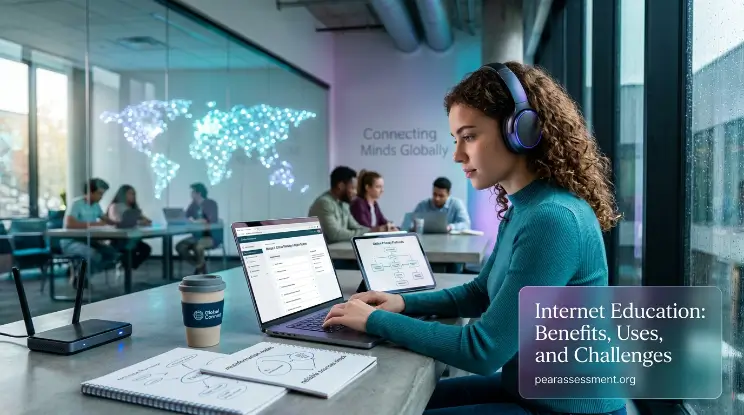
The internet can be a valuable educational tool for students, teachers, and parents when it is used responsibly and with clear learning goals. Students can use online resources to research different topics, access study materials, practice skills, watch educational content, and participate in online courses.
How Students Can Use the Internet
Students can use the internet in various ways to support their education and make learning more effective. They can look for useful information, download or read study materials, watch educational videos, and explore subjects that may not be fully covered in their regular classroom lessons.
Online learning also allows students to enroll in courses, develop new skills, participate in virtual study groups, and find trustworthy academic resources. When used responsibly, these digital tools can promote independent learning, help students understand challenging topics, and expand their overall knowledge.
Students can use the internet for many educational activities, including:
- Research assignments
- Watch educational tutorials
- Take online courses
- Practice skills
- Join virtual study groups
- Find academic resources
Using reliable online resources can help students improve their knowledge and develop independent learning skills.
How Teachers Can Use the Internet
Students can use the internet in various ways to support their education and make learning more effective. They can look for useful information, download or read study materials, watch educational videos, and explore subjects that may not be fully covered in their regular classroom lessons.
Online learning also allows students to enroll in courses, develop new skills, participate in virtual study groups, and find trustworthy academic resources. When used responsibly, these digital tools can promote independent learning, help students understand challenging topics, and expand their overall knowledge.
Teachers can use the internet to:
- Prepare lessons
- Share learning materials
- Conduct online assessments
- Communicate with students
- Use interactive teaching tools
These activities can make lessons more flexible and provide students with additional ways to learn.
Advantages and Disadvantages of Internet Education
Internet education offers several advantages, including flexible learning, easy access to information, and a wide variety of educational resources. Students can study from different locations, access lessons at convenient times, and use online tools to support their academic needs.
| Advantages | Disadvantages |
| Flexible learning | Internet connectivity problems |
| Wider access to information | Distractions |
| Lower travel requirements | Screen fatigue |
| Global learning opportunities | Less face-to-face interaction |
| Multimedia resources | Digital divide |
| Self-paced learning | Unreliable online information |
Students may also find it difficult to stay focused when learning online, especially when entertainment and social media are easily available on the same device.
Challenges of Internet Education and How to Overcome Them
Although internet education offers many learning opportunities, it can also present challenges for both students and teachers. Issues such as limited internet access, technical problems, online distractions, unreliable information, and a lack of digital skills can make online learning less effective.
Poor Internet Access and the Digital Divide
Reliable internet access is important for effective online learning. Students who have slow connections, costly data plans, or limited access to computers and smartphones may find it difficult to attend virtual classes, stream educational videos, or download study materials.
This issue is commonly known as the digital divide, which refers to the gap between people who have reliable access to technology and the internet and those who do not. The problem can be particularly difficult for students in rural or underserved communities, where dependable internet services and suitable digital devices may not be readily available.
Misinformation and Unreliable Sources
Not all websites provide accurate, reliable, or up-to-date educational information. While researching online, students may encounter incorrect facts, outdated content, or misleading information that can affect their learning and academic work.
To avoid misinformation, students should evaluate the source carefully, use trusted educational websites, and verify important facts by comparing them with other reliable sources. Taking these steps can help students use accurate information for assignments, research projects, and everyday learning.
Students should:
- Check the author
- Prefer reputable educational sources
- Compare information across multiple sources
Evaluating information before using it can help students avoid misinformation.
How to Use Internet Education Effectively
Internet education can be more effective when students use online resources with clear learning objectives and follow a consistent study routine. Selecting reliable educational websites, courses, and learning materials can help students access accurate information while avoiding unreliable or misleading sources.
Choose Reliable Educational Resources
Students should rely on trustworthy and reputable sources when searching for educational information online. Reliable resources can provide accurate, current, and useful information to support assignments, research projects, and everyday study.
Students should consider using sources such as universities, government education websites, established educational organizations, and reputable online learning platforms. Checking the credibility of a source before using its information can help students avoid inaccurate, outdated, or misleading content and improve the quality of their academic work.
Useful sources can include:
- Universities
- Government education websites
- Reputable educational organizations
- Recognized online learning platforms
Choosing reliable resources can improve the quality of information students use for assignments and learning.
Create a Simple Online Study Routine
A simple online study routine can help students stay organized, focused, and consistent while learning through the internet. Instead of studying without a plan, students can set clear learning goals and choose specific times for online lessons, courses, and study activities.
Students can create a daily or weekly schedule, take notes during lessons, complete practice exercises, and regularly review what they have learned. Following a consistent routine can make it easier to manage time, reduce distractions, stay motivated, and make steady progress in the
Students can follow a simple routine to make online learning more organized:
- Set a learning goal
- Choose reliable resources
- Create a schedule
- Take notes
- Practice what you learn
- Review your progress
A consistent routine can help students stay focused and make steady progress.
Develop Digital and Research Skills
Digital and research skills help students find, evaluate, understand, and use information effectively online. Students should learn how to search for relevant information, identify trustworthy sources, and compare facts from different websites before using them in their studies.
They should also know how to organize digital notes, avoid plagiarism, properly use online information, and keep their study materials organized. Developing these skills can help students complete assignments more accurately, conduct better research, and become more confident and independent learners.
Important skills include:
- Search smarter
- Verify sources
- Avoid plagiarism
- Organize digital notes
Frequently Asked Questions
What is internet education?
Internet education is learning and teaching through internet-based resources and tools. It can include online courses, virtual classes, educational websites, digital libraries, videos, and online learning platforms.
What are the main benefits of internet education?
The main benefits include flexible learning, wider access to information, convenient learning, more educational resources, better communication, and opportunities for self-paced learning.
How does the internet help students learn?
The internet helps students find academic resources, research assignments, watch educational tutorials, take online courses, practice skills, and communicate or collaborate with others.
What are the disadvantages of internet education?
Common disadvantages include internet connectivity problems, distractions, screen fatigue, less face-to-face interaction, misinformation, and unequal access to devices and reliable internet.
How can students use the internet safely for education?
Students can use the internet safely by choosing reliable sources, protecting personal information, using strong passwords, avoiding suspicious links, and using secure learning platforms.
Conclusion
Internet education has made learning more flexible and accessible by giving students and teachers access to online courses, educational websites, digital libraries, videos, and a wide range of other learning resources. It supports independent learning, improves communication, and creates educational opportunities beyond the traditional classroom.
However, internet education also comes with challenges such as limited internet connectivity, online distractions, misinformation, digital safety risks, and unequal access to technology. By using trustworthy resources, developing essential digital skills, following a consistent study routine, and practicing responsible internet use, students and teachers can overcome many of these challenges and make online education more effective and beneficial.