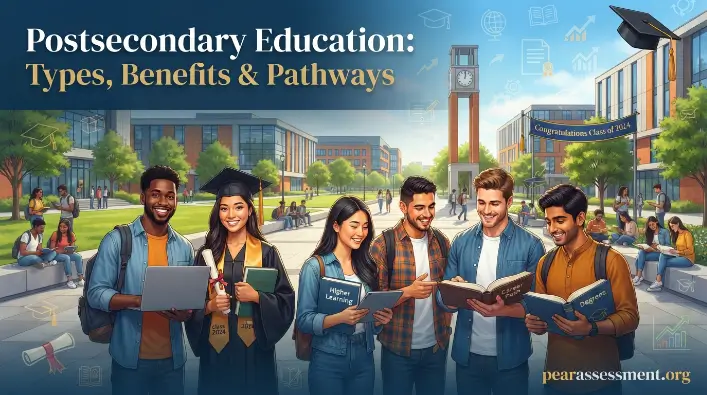
Welcome to Pear Assessment. Postsecondary education refers to learning that students pursue after completing secondary school. It can include universities, colleges, technical institutes, vocational programs, certificate courses, diploma programs, and professional education. These pathways help students develop academic knowledge, practical skills, and qualifications for future careers.
Choosing the right postsecondary education pathway is an important decision because every student has different goals, interests, financial circumstances, and career plans. Understanding the available options can make it easier to compare programs, evaluate institutions, and select an education path that supports long-term goals.
What Is Postsecondary Education?
Postsecondary education refers to any formal education or training that a person completes after finishing secondary school. In simple terms, it is the next stage of education after high school or an equivalent level of schooling. It allows students to continue learning, specialize in a particular subject, develop practical skills, or prepare for a specific career. Postsecondary education includes many different options. Students may attend a college or university, complete a certificate or diploma program, receive technical or vocational training, or enter a professional program such as medicine, engineering, law, or education.
What Comes After Secondary School?
After completing secondary school, students usually have several options for continuing their education or preparing for a career. The right choice depends on their interests, academic performance, career goals, financial situation, and preferred type of learning.
Some students choose to attend a college or university and work toward a bachelor’s degree or another higher qualification. Others may prefer technical or vocational education, where they can develop practical skills for a specific occupation. Students can also choose certificate or diploma programs that may take less time and focus on particular skills or career areas.
Common options include:
- Colleges
- Universities
- Technical institutes
- Vocational training programs
- Certificate programs
- Diploma programs
- Professional education programs
The best choice depends on the student’s intended career, academic background, available finances, and preferred learning style.
Is Postsecondary Education the Same as Higher Education?
Higher education generally refers to education provided by colleges, universities, and other institutions offering advanced academic or professional qualifications. Postsecondary education can be used more broadly to describe education and training that occurs after secondary school, including some technical, vocational, certificate, and diploma programs.
In everyday use, the two terms may overlap. For example, a bachelor’s degree at a university is both postsecondary and higher education. A career-focused certificate completed after secondary school may also be considered postsecondary education, depending on the country’s education system.
Types of Postsecondary Education
Postsecondary education includes different types of programs and learning pathways that students can choose after completing secondary school. Not every student has the same career goals, so there is no single type of postsecondary education that is right for everyone. Some students may want to earn a traditional university degree, such as a bachelor’s degree, because their chosen career requires a higher academic qualification.
Colleges and Universities
Colleges and universities provide academic and professional education across many fields. Students can study subjects such as business, computer science, education, engineering, social sciences, natural sciences, and humanities.
Universities commonly offer undergraduate and graduate programs, while colleges may provide undergraduate, diploma, certificate, or specialized programs depending on the education system.
Technical and Vocational Education
Technical and vocational education focuses on practical knowledge and job-related skills. Instead of concentrating mainly on academic theory, these programs often emphasize hands-on training and preparation for specific occupations.
In Pakistan, technical and vocational pathways can include programs such as the Diploma of Associate Engineering (DAE) and other skills-based qualifications. These options can be useful for students who prefer practical learning and want career-focused training.
Read Also: Sustainability Education: Meaning, Benefits and Examples
Common Postsecondary Degrees and Qualifications
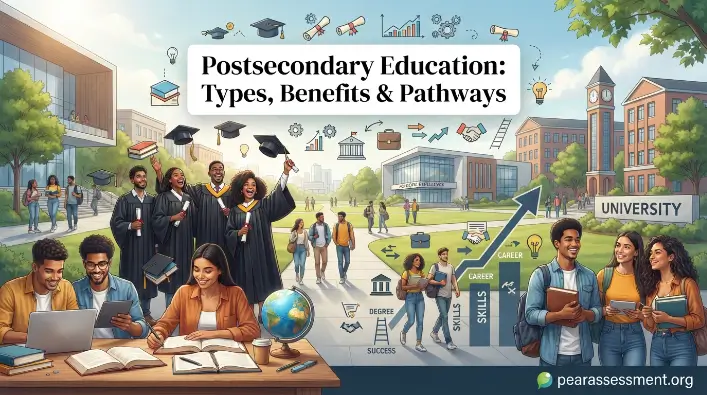
Postsecondary education offers students different types of degrees and qualifications, depending on what they want to study and the career they want to pursue. Not every student needs the same level of education. Some careers may require a short certificate or diploma, while others may require a bachelor’s, master’s, or doctoral degree.
| Qualification | General Purpose |
| Certificate | Focused education or skill development |
| Diploma | Practical or specialized education |
| Associate-level qualification | Foundational higher education |
| Bachelor’s degree | Undergraduate academic or professional education |
| Master’s degree | Advanced study and specialization |
| Doctoral degree | Advanced research and expertise |
The length, structure, and recognition of these qualifications can vary between countries and fields. Students should therefore check the specific requirements of the institution and career they are considering.
Undergraduate Education
Undergraduate education generally includes bachelor’s degrees and other foundational postsecondary qualifications. A bachelor’s program allows students to study a particular field in greater depth while developing academic, analytical, communication, and professional skills.
Some programs are broad, while others are highly specialized. For many careers, a bachelor’s degree is the basic qualification required for professional employment or further graduate education.
Graduate Education
Graduate education provides advanced study after an undergraduate qualification. Common options include master’s degrees and postgraduate diplomas. Students may pursue graduate education to specialize in a particular subject, improve professional knowledge, qualify for advanced positions, or prepare for research.
The requirements vary by program. Some master’s programs may require relevant undergraduate study, entrance examinations, professional experience, or other prerequisites.
Benefits of Postsecondary Education
Postsecondary education can provide students with a range of academic, professional, and practical benefits after secondary school. It can help learners gain specialized knowledge, develop useful skills, earn recognized qualifications, and prepare for careers that require additional education or training. One major benefit is that postsecondary education can improve career preparation and employment opportunities.
Builds Career-Ready Skills
Many postsecondary programs help students develop skills that can be applied in professional environments. Depending on the program, students may develop technical knowledge, communication abilities, problem-solving skills, research skills, teamwork, digital skills, or practical occupational abilities.
Career-focused programs can also provide hands-on experience that helps students understand how their knowledge applies outside the classroom.
Expands Career Opportunities
Certain careers require specific postsecondary qualifications. Completing the appropriate degree, diploma, certificate, or professional program can therefore make students eligible for opportunities that may not be available with only secondary education.
A relevant qualification can also help demonstrate specialized knowledge and preparation to potential employers.
Develops Critical Thinking and Professional Knowledge
Postsecondary education can help students examine complex ideas, evaluate information, solve problems, and communicate effectively. Academic programs often encourage independent thinking and research, while technical and professional programs can combine theoretical knowledge with practical application. These abilities can be useful across many different careers and professional environments.
How to Choose the Right Postsecondary Program
Choosing the right postsecondary program is an important decision because it can influence your future career, skills, education costs, and professional opportunities. Students should not choose a program simply because it is popular, offered by a well-known institution, or recommended by someone else. Instead, it is important to consider how well the program matches your career goals, interests, academic background, financial situation, and preferred learning style.
Compare Program Requirements
Different postsecondary programs can have different admission requirements, so students should carefully check what is needed before applying. Requirements may vary depending on the institution, program, level of study, and field of education.
For example, one program may require specific subjects in secondary school, while another may require a certain minimum grade, entrance test, interview, or previous qualification. Some professional programs may also have additional requirements that students must meet before admission.
Before applying, check:
- Required academic qualifications
- Required subjects
- Minimum grades
- Entrance examinations
- Language requirements
- Additional documents
Reviewing these requirements early can prevent unexpected problems during the admission process.
Compare Costs and Financial Aid
The cost of postsecondary education is not limited to tuition fees. Students should consider all the expenses they may have to pay throughout their studies before choosing a program. These can include transportation, accommodation, books, study materials, examination fees, technology, and other institutional charges.
For example, a program with lower tuition may become more expensive if the student has to travel a long distance or pay for accommodation. On the other hand, a slightly more expensive institution may offer better financial support or facilities that make the overall cost more manageable.
Students should consider:
- Tuition fees
- Transportation
- Accommodation
- Books and study materials
- Technology requirements
- Examination fees
- Other institutional expenses
It is also worth researching scholarships and other financial support before making a final decision.
College vs. University vs. Vocational Education
College, university, and vocational education are three different types of postsecondary education, and each one serves different academic and career goals. The main difference is the type of education and training students receive. Universities generally focus on academic and professional education and offer degrees such as bachelor’s, master’s, and doctoral programs.
Different postsecondary pathways serve different purposes:
| Pathway | Main Focus | Best For |
| College | Academic or practical education | Students seeking foundational or specialized study |
| University | Degrees and advanced education | Students pursuing academic or professional careers |
| Vocational/Technical | Practical skills | Students seeking career-focused training |
A university may be appropriate for someone pursuing an academic or professional career that requires a degree. A vocational program may be better for someone who prefers hands-on training and wants to develop specific occupational skills.
Which Path Is Best for You?
There is no single postsecondary education pathway that works best for every student. The right choice depends on your career goals, academic interests, financial situation, learning style, and long-term plans. What works well for one student may not be suitable for another.
For example, if you want to become a doctor, engineer, teacher, lawyer, or another professional whose career requires a specific degree, you may need to follow a university education pathway. A bachelor’s degree or another professional qualification may be an important part of reaching that career.
Common Mistakes Students Make
Choosing a postsecondary education program is an important decision, but students can sometimes make mistakes when selecting a college, university, diploma, certificate, or vocational program. These mistakes may lead to unnecessary expenses, unsuitable career choices, or difficulties later in their education. One common mistake is choosing a program only because it is popular or offered by a well-known institution. A program may have a good reputation but still not match a student’s interests or career goals.
Choosing a Program Only for Its Name
A well-known program or institution may sound attractive, but its name alone does not guarantee that it is the right choice.
Students should examine the curriculum, recognition, costs, learning environment, practical opportunities, and connection to their career goals.
Ignoring Recognition and Accreditation
One of the most serious mistakes is enrolling without checking whether the institution or qualification is properly recognized.
Before paying fees or submitting admission documents, verify the relevant recognition and accreditation requirements. This is particularly important for students in regulated professional fields.
Focusing Only on Tuition Fees
Choosing the cheapest program is not always the most affordable decision in the long term.
Students should consider the complete cost of education, including transportation, accommodation, study materials, and other expenses. At the same time, a more expensive program is not automatically better.
The goal should be to find a program that provides appropriate education and value for the student’s career goals.
How to Prepare for Postsecondary Education
Preparing for postsecondary education before enrollment can make the transition from secondary school much easier. Students are often expected to take more responsibility for their studies, manage their time independently, complete assignments, and make important academic decisions. Starting preparation early can help reduce stress and make students feel more confident.
Strengthen Your Academic Foundation
Before starting postsecondary education, students should build a strong academic foundation in subjects related to their intended field of study. A good understanding of basic concepts can make it easier to handle more advanced coursework after secondary school.
For example, a student planning to study engineering, computer science, medicine, or another science-related field may benefit from strong knowledge of mathematics and relevant science subjects. Similarly, students interested in business may want to develop their understanding of mathematics, communication, economics, or other related subjects.
Research Programs Early
Students should start researching postsecondary programs and institutions well before application deadlines. Waiting until the last moment can make it difficult to compare options, prepare documents, meet eligibility requirements, or apply for scholarships.
When researching programs, look at important factors such as admission requirements, curriculum, tuition fees, location, recognition, facilities, and available learning opportunities. Also consider whether the program provides practical training, internships, or other experiences related to your career goals.
Is Postsecondary Education Worth It?
Postsecondary education can be a valuable investment when it helps students gain the knowledge, skills, qualifications, and practical experience they need for their future goals. However, whether it is worth it depends on the student’s chosen career, education pathway, financial situation, and the quality of the program. For some careers, a specific degree or professional qualification is essential.
- Explain the potential academic, professional, and personal benefits.
- Discuss situations where a degree may be necessary.
- Explain when technical or vocational education may make more sense.
- Emphasize return on investment rather than simply choosing the longest program.
A thoughtful decision based on career goals, financial circumstances, program quality, and personal interests can make postsecondary education a worthwhile investment.
Frequently Asked Questions
What is postsecondary education?
Postsecondary education is education or training completed after secondary school. It can include universities, colleges, technical institutes, vocational programs, certificate courses, diploma programs, and professional education.
What are examples of postsecondary education?
Examples include bachelor’s degree programs, master’s degrees, doctoral programs, technical diplomas, vocational training, certificate programs, and professional education such as medicine or engineering.
Is university considered postsecondary education?
Yes. University education is a form of postsecondary education because it takes place after secondary school. Universities commonly offer undergraduate, graduate, and professional programs.
What is the difference between postsecondary and higher education?
The terms often overlap. Higher education generally refers to advanced education provided by universities and colleges, while postsecondary education can be a broader term covering education and training after secondary school, including some vocational and technical pathways.
What should I check before choosing a postsecondary program in Pakistan?
Students should check the institution’s recognition status, relevant campus information, program requirements, curriculum, costs, admission criteria, and professional accreditation requirements where applicable. HEC resources can be used to verify relevant higher-education institutions and qualifications.
Conclusion
Postsecondary education gives students many options for continuing their education after secondary school. These options include universities, colleges, technical institutes, vocational programs, certificate courses, diploma programs, and professional education. Each pathway can serve different academic and career goals.
The right choice depends on the career you want to pursue, the qualification it requires, your financial situation, and the type of learning environment you prefer. Before enrolling, research the program carefully, compare costs and requirements, and verify recognition and accreditation where relevant. For students in Pakistan, checking HEC information is particularly important when evaluating higher-education institutions and qualifications. With careful planning, postsecondary education can provide a strong foundation for skills, career development, and further learning.