
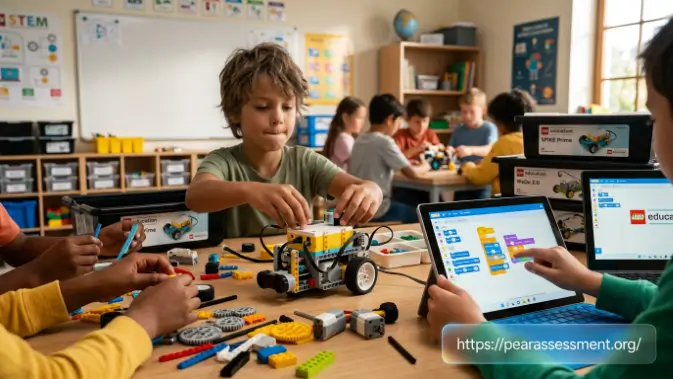
Welcome to Pear Assessment. Modern education goes beyond memorizing facts. Students need creativity, problem-solving abilities, and practical skills that prepare them for future challenges. LEGO Education helps learners explore complex ideas through building, testing, experimenting, and completing real-world projects.
By combining STEM education, hands-on learning, robotics, and coding activities, LEGO Education strengthens critical thinking, teamwork, engineering abilities, and innovation. It turns classrooms into interactive spaces where students learn by designing, creating, and solving problems. From schools to home learning, LEGO Education supports project-based learning and helps students develop skills relevant to technology-focused careers.
What Is LEGO Education?
LEGO Education provides specialized LEGO kits, lessons, activities, and learning resources designed to teach students through practical experiences. Unlike standard LEGO products, it emphasizes STEM education, coding, engineering, creativity, and problem-solving. Students can build models, test their ideas, and understand concepts through hands-on projects connected to real-world situations. While regular LEGO is primarily intended for creative play, LEGO Education is structured for educational use and classroom learning. It gives teachers practical ways to explain complex subjects while helping students develop critical thinking, teamwork, and hands-on learning skills.
How LEGO Education Supports Modern Learning
LEGO Education promotes modern learning by creating an active classroom environment where students gain knowledge through doing rather than relying only on reading or memorization. With hands-on learning, students can construct models, test different approaches, identify problems, and refine their solutions while developing practical skills related to real-world challenges.
It also strengthens creativity, collaboration, and problem-solving skills. Students work together on projects, exchange ideas, and develop solutions through logical and creative thinking. These collaborative learning activities encourage confidence and help learners develop useful skills for future opportunities in technology, engineering, and innovation.
Read also: Best Pear Assessment Alternatives for Better Teaching
Why LEGO Education Is Important for Students
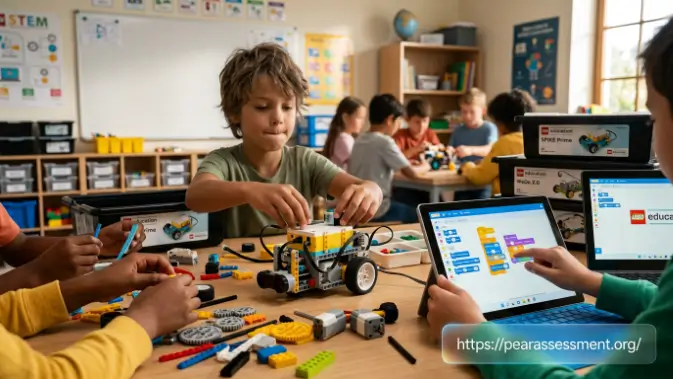
LEGO Education helps students build future-ready abilities through STEM education, practical activities, and creative projects. It turns conventional learning into interactive experiences where learners construct, test ideas, and address real-world challenges while strengthening technical and personal skills.
Develops STEM Skills
LEGO Education brings science, technology, engineering, and mathematics together through practical building tasks. Students understand challenging concepts by creating models, testing different designs, and applying their knowledge through hands-on learning activities.
Key STEM skills developed:
- Science learning through experiments, models, and practical classroom activities
- Technology skills through robotics, coding, and digital tools
- Engineering knowledge through designing, building, and improving structures
- Mathematics skills through calculations, measurements, and logical problem-solving
- Critical thinking development through challenges and solution-based activities
Improves Creativity and Critical Thinking
LEGO Education promotes creativity by giving students opportunities to explore ideas and create their own solutions. Through project-based learning, learners examine problems, test different designs, and refine their projects based on what they discover.
Students improve creativity through:
- Building challenges that promote innovative thinking and design abilities
- Experimentation that allows students to discover solutions independently
- Learning from mistakes and making changes to improve project results
- Developing flexible thinking by trying different construction methods
- Creating original models by combining imagination with technical skills
Builds Communication and Teamwork Skills
LEGO Education strengthens teamwork by involving students in shared projects and activities. Through collaborative learning, learners exchange ideas, communicate clearly, and develop leadership skills while working toward common goals.
Students develop:
- Group project experience through teamwork-focused learning activities
- Classroom collaboration through shared objectives and responsibilities
- Leadership skills through planning, organization, and decision-making tasks
- Communication abilities through explaining ideas, processes, and solutions
- Confidence by presenting completed projects and discussing their work
How LEGO Education Works in Classrooms
LEGO Education creates active learning environments in which students learn by building, testing, and solving problems. It supports hands-on learning by linking classroom concepts with practical activities, creativity, and teamwork.
Project-Based Learning With LEGO
LEGO Education applies project-based learning to help students gain practical abilities through planning, designing, and constructing projects. Learners develop understanding by creating solutions, evaluating their work, and refining their ideas.
Activities include building models, addressing engineering challenges, and developing prototypes. These projects strengthen creativity, critical thinking, and problem-solving by giving students opportunities to work on practical challenges.
LEGO Activities for Different Age Groups
LEGO Education offers age-appropriate activities that support creative learning skills. Students work on projects suited to their abilities and educational needs.
Early Childhood Learning
LEGO Education helps young learners develop foundational construction abilities, recognize colors and shapes, and strengthen motor skills through age-appropriate building activities.
Primary School Learning
Students use LEGO Education to explore simple machines, conduct science activities, and participate in story-based learning. These experiences encourage curiosity, creativity, and practical understanding.
Middle and High School Learning
Older students use LEGO Education for robotics, programming, and engineering challenges. These activities strengthen technical abilities, logical reasoning, and knowledge of STEM concepts.
Real-World Learning Examples
LEGO Education links classroom concepts to real-world applications through practical projects. Students apply problem-solving skills to develop solutions and see how academic concepts can be used in everyday situations.
Examples include building bridges to explore engineering principles, creating robots to learn programming, and developing models that address real-world challenges. These activities strengthen creativity, innovation, and practical understanding.
Teacher’s Role in LEGO Classroom
Teachers help make LEGO Education effective by supporting students throughout activities and projects. They design challenges, explain relevant concepts, and encourage learners to consider multiple possible solutions.
Through guided learning, teachers help students identify mistakes, refine designs, and strengthen teamwork, communication, and critical thinking abilities.
Assessment Through LEGO Projects
LEGO Education gives teachers opportunities to evaluate learning through practical projects rather than relying only on written tests. Student projects can demonstrate creativity, technical abilities, and approaches to problem-solving.
Teachers can assess:
- Project design and creativity
- Problem-solving approach
- Teamwork and communication skills
- Understanding of concepts and improvements
LEGO Education Products and Learning Solutions
LEGO Education offers structured learning solutions that combine building, technology, and STEM education to develop practical abilities. These resources support robotics, coding, engineering, and problem-solving through interactive projects and are designed to make classroom learning more engaging and connected to real-world applications.
LEGO Education SPIKE Platform
LEGO Education SPIKE is an advanced learning platform for teaching robotics, coding, and engineering through practical projects. Students build programmable robots, explore mechanical systems, and understand how different technology components work together. Through computational thinking, learners create programs, test solutions, and refine designs while completing engineering challenges. SPIKE supports coding, logical reasoning, creativity, and teamwork while helping students prepare for technology-focused fields.
LEGO Education WeDo
LEGO Education WeDo is intended for beginners who are beginning to explore robotics and coding. It introduces foundational robotics concepts, programming basics, sensors, and motor-powered projects.
Through hands-on learning, students construct interactive models and operate their creations with simple coding instructions. WeDo encourages curiosity, creativity, problem-solving, and confidence when working with technology.
LEGO Classroom Kits
LEGO Education Classroom Kits give teachers organized resources for developing engaging and effective lessons. These kits include teaching guides, lesson resources, and student activities designed for different subjects and learning levels.
Through project-based learning, students work through practical challenges that strengthen collaboration, creativity, and critical thinking. Teachers can use the resources to make complex concepts easier to understand and create more interactive classroom experiences.
LEGO Education and STEM Learning
LEGO Education supports STEM learning by combining construction, technology, and practical activities. Students explore science, engineering, and digital concepts through robotics, coding, and problem-solving projects that connect classroom learning with practical applications.
How LEGO Helps Teach Robotics
LEGO Education makes robotics more accessible by allowing students to construct and program functional models. Learners investigate how robots move, react, and perform tasks through practical experiments.
Students explore important robotics concepts, including sensors that gather information, motors that move, and programming logic that directs robot behavior. These activities strengthen engineering skills, creativity, and problem-solving abilities.
Coding Skills Through LEGO
LEGO Education introduces coding through interactive projects that make programming concepts easier to explore. Students create instructions, control robotic models, and learn how software can influence physical systems.
Through computational thinking, learners develop abilities in block-based programming, algorithmic concepts, and logical decision-making. LEGO coding activities provide an approachable way to understand programming fundamentals while building confidence with technology.
Benefits of Using LEGO Education for Teachers
LEGO Education helps teachers develop engaging lessons using practical activities and hands-on learning approaches. It can make concepts easier to teach, increase participation, and provide flexible learning methods for different classroom needs.
Key benefits for teachers include:
- Easier lesson planning with ready-made resources and structured activities
- Higher student engagement through interactive projects and challenges
- Flexible teaching methods for different subjects and learning levels
- Better classroom participation through teamwork and practical learning
- Easier explanation of complex concepts through visual activities
- Improved assessment through student projects and creative solutions
Benefits of LEGO Education for Parents and Home Learning
LEGO Education extends learning beyond the classroom by helping children build skills through creative activities at home. It supports experiential learning by giving parents ways to create meaningful experiences in which children explore concepts, solve problems, and learn with greater independence.
Learning Outside School
LEGO Education allows children to continue developing skills outside school through practical building projects and creative challenges. Students can apply classroom concepts to practical situations while strengthening curiosity and problem-solving abilities.
Parents can use LEGO activities to encourage hands-on learning by helping children explore science, technology, engineering, and creative thinking at home.
Family Activities
LEGO Education gives parents and children opportunities to learn together through building and problem-solving tasks. Family projects can strengthen communication, teamwork, and creativity while keeping learning engaging.
Through collaborative learning, parents can guide children, exchange ideas, and encourage them to develop solutions through shared LEGO projects.
Developing Independent Thinking
LEGO Education encourages children to become more independent learners by giving them opportunities to plan, build, test, and refine their ideas. It helps them practice making decisions and addressing challenges without relying entirely on others.
These activities develop critical thinking skills, confidence, and creativity, helping children become more capable problem solvers in everyday situations.
Common Mistakes When Using LEGO Education
Using LEGO Education effectively requires defined learning objectives, appropriate guidance, and suitable activities. Avoiding common mistakes allows students to gain greater value from hands-on learning while developing creativity, problem-solving, and technical abilities.
Using LEGO Only as Entertainment
LEGO Education should serve a clear educational purpose rather than being used solely as a recreational building activity. Without defined objectives, students may enjoy constructing models without achieving the intended learning outcomes.
The solution is to establish learning goals before each activity. Teachers and parents should connect LEGO projects with areas such as STEM education, engineering, coding, and problem-solving.
Not Allowing Students to Experiment
LEGO Education is most effective when students have opportunities to explore different ideas and test their own solutions. Restricting experimentation can limit learning opportunities and reduce the development of innovative thinking.
The solution is to support creativity by allowing students to try alternative designs, learn from mistakes, and refine their projects through creative problem-solving.
Choosing the Wrong Difficulty Level
Activities that are either too simple or too challenging can influence student engagement and progress. A suitable level of difficulty gives learners an appropriate challenge while keeping them motivated.
The solution is to select activities according to students’ ages, existing skills, and learning abilities. Well-matched projects help build confidence and strengthen critical thinking skills effectively.
LEGO Education vs Traditional Learning Methods
LEGO Education emphasizes hands-on learning, creativity, and practical experiences, whereas traditional learning often places greater emphasis on theory, memorization, and written activities. Both approaches can contribute to education, while LEGO Education gives students opportunities to understand concepts through active participation and practical applications.
| LEGO Education | Traditional Learning |
| Hands-on activities that encourage practical learning | Theory-based learning focused on concepts |
| Creative problem-solving through projects | Memorization of information and facts |
| Collaboration and teamwork during activities | Individual work and independent study |
| Practical experiments and real-world applications | Written exercises and theoretical tasks |
| Learning through building, testing, and improving ideas | Learning through reading and classroom instruction |
| Develops creativity, innovation, and critical thinking | Focuses on knowledge retention and academic skills |
LEGO Education provides an interactive setting in which students actively engage with learning, while traditional methods can establish foundational knowledge through structured instruction. Using both approaches together can provide a balanced learning experience.
Future of LEGO Education and Digital Learning
LEGO Education is developing alongside modern technology by combining digital learning, robotics, and artificial intelligence. These approaches support future-ready skills through interactive learning experiences and help prepare students for fields related to science, technology, engineering, and mathematics.
Future developments include:
- AI integration to create smarter and more personalized learning experiences
- Robotics growth to improve engineering and programming education
- Digital classrooms with interactive tools and connected learning platforms
- Preparation for future STEM careers through technical skills development
- Increased focus on creativity, innovation, and problem-solving abilities
Frequently Asked Questions
What is LEGO Education used for?
LEGO Education is used to teach STEM education, robotics, coding, engineering, and problem-solving skills through practical building activities and classroom projects.
Is LEGO Education suitable for all age groups?
Yes, LEGO Education provides learning solutions for different ages, from early childhood to advanced students. Activities can be adjusted according to students’ skills and learning goals.
Does LEGO Education teach coding?
Yes, LEGO Education teaches coding through robotics projects and block-based programming. Students learn programming logic, algorithms, and computational thinking.
What skills do students develop through LEGO Education?
Students develop creativity, teamwork, communication, critical thinking, engineering skills, and problem-solving skills through interactive LEGO projects.
Can LEGO Education be used at home?
Yes, parents can use LEGO Education for home learning to encourage creativity, independent thinking, and hands-on learning through fun educational activities.
Conclusion
LEGO Education transforms learning by combining STEM education, creativity, coding, and practical activities. It helps students understand complex concepts through building, testing, and solving real-world challenges while developing essential skills for the future.
With robotics, digital tools, and hands-on learning, LEGO Education creates engaging experiences for students, teachers, and parents. It encourages innovation, teamwork, and problem-solving, making learning more interactive and effective.