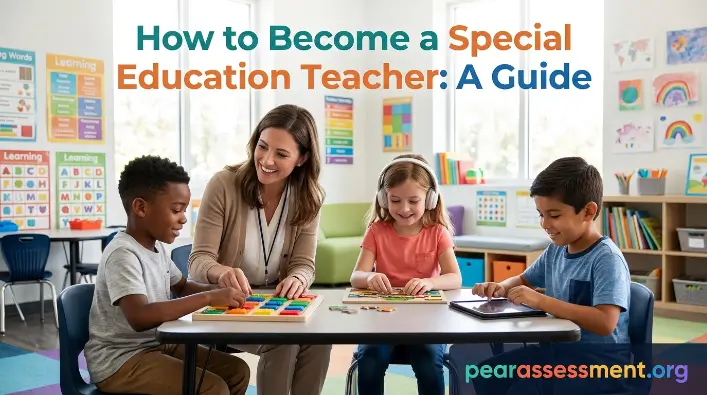
Welcome to Pear Assessment. Becoming a special education teacher can be a meaningful career for people who want to help students overcome learning barriers and reach their potential. Special education teachers work with students who have different learning, developmental, physical, behavioral, and communication needs.
If you are wondering how to become a special education teacher, the process generally involves earning a relevant degree, completing teacher preparation and classroom experience, meeting certification or licensing requirements, and applying for teaching positions. The exact requirements can vary depending on where you plan to teach, so understanding each step can help you choose the right path.
What Does a Special Education Teacher Do?
A special education teacher supports students who need additional or adapted instruction because of disabilities or other learning needs. Unlike a general classroom teacher who may teach a broader group using a standard curriculum, a special education teacher often modifies lessons and provides individualized support.
Supporting Students With Different Learning Needs
Special education teachers work with students who may learn, communicate, or respond to instruction in different ways. Some students may have learning disabilities, developmental differences, physical needs, communication challenges, or behavioral and emotional needs. Each student may require a different level or type of support.
Teachers adapt their lessons and teaching methods to match individual needs. For example, one student may learn better with visual materials, while another may need extra time, repeated instructions, hands-on activities, or one-on-one guidance. The goal is to create a supportive learning environment where every student can participate, build skills, and make meaningful progress.
Special education teachers may work with students who have:
- Learning disabilities
- Developmental differences
- Physical needs
- Communication challenges
- Behavioral and emotional needs
The goal is to help each student participate in learning and make meaningful academic and personal progress.
Creating Individualized Education Programs
Special education teachers play an important role in creating Individualized Education Programs (IEPs) for students who need specialized educational support. An IEP is a personalized plan that focuses on a student’s individual learning needs, strengths, challenges, and academic goals.
When creating an IEP, teachers may review the student’s current performance, identify areas where additional support is needed, and help establish realistic and measurable learning goals. The plan can also outline specific accommodations, instructional strategies, classroom support, and other services that may help the student participate more effectively in learning.
Teachers may help with:
- Developing appropriate learning goals
- Monitoring student progress
- Documenting performance
- Communicating with families
- Working with other professionals
This makes organization and clear communication important parts of the job.
Read Also: Charlie Kirk Education: School, College, And Degree
What Education Do You Need to Become a Special Education Teacher?
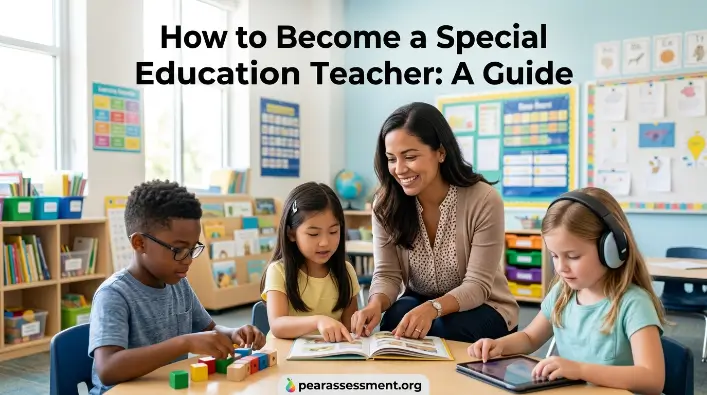
The education required to become a special education teacher depends on the teaching pathway and the location where you plan to work. In many cases, a bachelor’s degree is an important first step. A degree in special education can provide specific knowledge about teaching students with disabilities, while related education degrees may also provide a pathway toward certification depending on local requirements.
Bachelor’s Degree in Special Education
A bachelor’s degree in special education is one of the most direct educational pathways for people who want to become special education teachers. These programs prepare future teachers to work with students who have different learning, developmental, physical, behavioral, or communication needs. Students learn how to understand individual learning differences and provide appropriate educational support.
During the degree program, students may study special education teaching methods, child development, classroom management, student assessment, instructional planning, and learning disabilities. The program may also include practical classroom experience, helping students develop the skills they need to work effectively with students before beginning their professional teaching career.
Master’s Degree in Special Education
A master’s degree in special education can be a valuable option for teachers who want to build advanced knowledge and strengthen their skills in supporting students with disabilities. It allows educators to study special education topics in greater depth and develop a better understanding of different learning needs, teaching strategies, assessment methods, and classroom practices.
A master’s degree can also support professional growth and additional career opportunities in special education. Teachers may use advanced education to develop specialized expertise or qualify for certain roles. However, a master’s degree is not required for every special education teaching pathway, so prospective teachers should check the education and licensing requirements in the location where they plan to work.
Special Education Teacher Certification and Licensing
Certification and licensing are important steps for becoming a special education teacher because they show that an educator has met the required standards to teach students in a particular education system. These requirements help ensure that teachers have the necessary education, training, classroom experience, and knowledge to support students with different learning needs.
Common Certification Requirements
Becoming a certified special education teacher usually involves completing several education, training, and licensing requirements. These requirements help ensure that teachers have the knowledge, practical skills, and classroom experience needed to support students with different learning and support needs.
The requirements may include earning a relevant bachelor’s degree, completing a teacher preparation program, gaining supervised classroom experience, passing required certification exams, and completing background screening. Teachers may also need to submit a licensing application with supporting documents before they can begin teaching professionally.
Common requirements can include:
- A relevant bachelor’s degree
- Completion of a teacher preparation program
- Student teaching or supervised classroom experience
- Required teacher certification examinations
- Background screening
- Certification or licensing application
- Supporting education and experience documentation
Meeting these requirements does not necessarily follow the same order in every location, so it is important to follow the instructions provided by the relevant licensing authority.
Why Requirements Vary by State
Teacher certification requirements can vary from one state to another because each state may have its own rules for education, teacher preparation, examinations, and licensing. A special education teacher who qualifies in one state may need to complete additional requirements before teaching in another state.
For this reason, prospective teachers should check the requirements of the state where they plan to work before choosing a degree or certification program. Reviewing the official education or licensing requirements early can help you choose a pathway that matches your career goals and avoid unnecessary delays.
Different states can establish their own rules for:
- Education
- Examinations
- Teacher preparation programs
- Licensing
For this reason, a program that works for one person may not automatically meet the requirements for someone planning to teach somewhere else.
Skills You Need to Be a Successful Special Education Teacher
Academic qualifications and teaching certification are important, but they are only part of becoming a successful special education teacher. Teachers work with students who may have different learning styles, abilities, communication needs, and behavioral challenges, so they need strong interpersonal and classroom skills to support each student effectively. Important skills include patience, empathy, communication, collaboration, classroom management, adaptability, and problem-solving.
Patience and Empathy
Patience is an important quality for a special education teacher because students may learn at different speeds and may need more time, repetition, or individual support. A patient teacher understands that progress may take time and continues to encourage students without becoming frustrated. This helps create a calm and positive classroom where students feel comfortable learning.
Empathy is equally important because it helps teachers understand how students may feel when they face learning difficulties or other challenges. By showing empathy, teachers can build trust, understand individual needs, and provide support in a respectful way. A caring and understanding approach can help students feel valued, confident, and motivated to participate in learning.
Communication and Collaboration
Communication is an essential skill for special education teachers because they regularly interact with students, parents, teachers, and other education professionals. Clear communication helps everyone understand a student’s learning goals, progress, challenges, and the type of support they may need. Teachers also need to explain instructions in ways that students can understand.
Collaboration is equally important because a student’s education may involve several people working together. Special education teachers may collaborate with general education teachers, parents, counselors, therapists, and school staff to plan effective support. Working as a team helps ensure that everyone follows the student’s educational goals and provides consistent support.
What Is a Typical Day Like for a Special Education Teacher?
A typical day for a special education teacher involves much more than simply teaching lessons. Teachers may start the day by reviewing lesson plans, preparing learning materials, checking student goals, and making adjustments based on individual needs. They may also organize activities or resources to make lessons easier for students to understand and participate in. During the school day, teachers may work with students individually, in small groups, or as part of an inclusive classroom.
Throughout the day, they may:
- Teach individuals or small groups
- Modify lessons
- Monitor student progress
- Provide additional support
- Collaborate with general education teachers
- Work with other professionals
Because responsibilities vary between schools and classrooms, there is no single schedule that represents every special education teacher.
Where Can Special Education Teachers Work?
Special education teachers can work in a variety of educational environments, depending on their qualifications, certification, and local job opportunities. They may support students in traditional classrooms, specialized programs, or settings designed specifically for students who need additional educational support.
Common settings include:
- Public schools
- Private schools
- Special education centers
- Inclusive classrooms
- Early childhood programs
- Specialized educational programs
- Other education and support settings
The responsibilities can differ between these environments. Some teachers may provide support within inclusive classrooms, while others may work primarily with students who require more specialized instruction.
How Long Does It Take to Become a Special Education Teacher?
The time required to become a special education teacher depends on your starting point, educational pathway, and the certification requirements in your location. Someone starting after high school will usually need to complete a bachelor’s degree, teacher preparation, classroom experience, and the required certification or licensing steps before applying for teaching positions.
| Path | Typical Route |
| Starting after high school | Bachelor’s degree → preparation → certification → teaching job |
| Already have a bachelor’s degree | Alternative certification → required experience/exams → license |
| Want advanced qualifications | Bachelor’s → master’s → certification/licensure |
Because requirements differ by location, there is no single timeline that applies to every prospective special education teacher.
Common Challenges of Being a Special Education Teacher
Special education teaching can be a rewarding career, but it also comes with responsibilities and challenges that prospective teachers should understand. Teachers may work with students who have different learning, behavioral, developmental, physical, or communication needs, which means they often need to adjust their teaching methods and provide individualized support.
Some common challenges include:
- Heavy documentation
- Emotional demands
- Classroom behavior challenges
- Differing student needs
- Collaboration with multiple professionals
- The need for continuous professional development
Strong preparation, teamwork, and support systems can help teachers manage these demands more effectively.
Is Special Education Teaching a Good Career Choice?
Special education teaching can be a rewarding career choice for people who enjoy helping students overcome learning barriers and supporting their individual development. It can be especially suitable for those who are patient, empathetic, and comfortable working with students who may learn at different speeds or require different types of support.
Before choosing the profession, consider questions such as:
- Do you enjoy helping students overcome learning barriers?
- Are you patient with different learning speeds?
- Can you communicate effectively with families and professionals?
- Are you comfortable adapting lessons?
- Are you willing to continue learning throughout your career?
The career can be rewarding, but it also requires patience, organization, flexibility, and emotional commitment. Understanding both the benefits and challenges can help you decide whether it matches your goals and strengths.
Frequently Asked Questions
How long does it take to become a special education teacher?
The timeline depends on your starting point and location. A traditional pathway generally involves a bachelor’s degree, teacher preparation, certification requirements, and then applying for teaching positions. Someone who already has a bachelor’s degree may have an alternative certification route available.
What degree is best for a special education teacher?
A bachelor’s degree in special education is one of the most direct options because it combines teacher preparation with specialized coursework. Related education degrees may also provide a pathway depending on certification requirements in the intended location.
Can I become a special education teacher with a bachelor’s degree in another subject?
In some cases, yes. Alternative certification programs may allow people with a bachelor’s degree in another subject to pursue special education teaching. However, the available pathways and requirements vary by location.
What Skills Are Most Important for a Special Education Teacher?
The most important skills for a special education teacher include patience, empathy, communication, collaboration, classroom management, adaptability, problem-solving, and organization. These skills help teachers understand that every student learns differently and may require a different approach, level of support, or teaching strategy.
Is being a special education teacher difficult?
It can be challenging because teachers may manage documentation, behavioral needs, different learning requirements, and collaboration with multiple professionals. However, strong preparation, teamwork, and support can help teachers manage these responsibilities while supporting student progress.
Conclusion
If you are researching how to become a special education teacher, the process generally begins with choosing the right educational pathway and continues through teacher preparation, classroom experience, certification or licensing, and employment. The exact requirements can vary depending on where you plan to teach.
Beyond a degree and teaching license, successful special education teachers need patience, empathy, communication skills, adaptability, and a willingness to continue learning. Understanding the responsibilities, challenges, and career opportunities can help you decide whether this profession is the right fit for you.