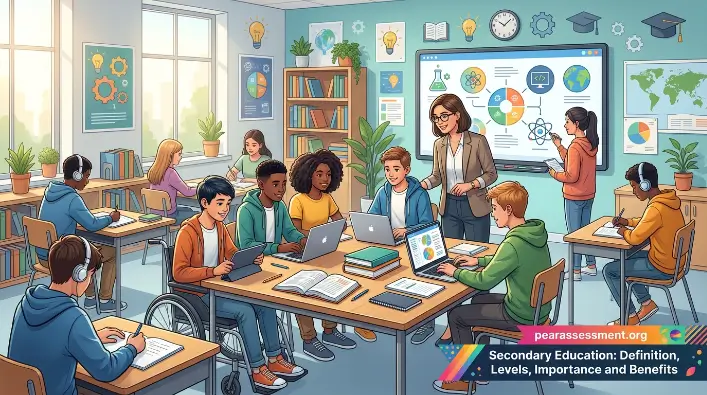
Welcome to Pear Assessment. Secondary education is an important stage of the education system that comes after primary education and before higher education. It helps students develop advanced knowledge, practical skills, and critical thinking abilities needed for future academic and professional success. This stage usually focuses on preparing teenagers for university studies, vocational training, or career opportunities.
A strong secondary school experience allows students to explore different subjects, improve their abilities, and build confidence for future challenges. The structure, age requirements, and curriculum of secondary education may vary between countries, but its main goal remains the same: providing students with the knowledge and skills required for personal growth and lifelong learning.
What Is Secondary Education?
Secondary education is the stage of learning after primary education and before higher education. It helps students gain advanced knowledge, practical skills, and preparation for future studies or careers. It is an important part of the education system that supports academic and personal development.
Definition of Secondary Education
Secondary education is the level of schooling that follows primary education. It focuses on advanced learning, critical thinking, and skill development through subjects like mathematics, science, languages, and social studies.
This stage is also called secondary school, high school education, senior school, or upper school in different countries. These terms may vary, but the purpose remains the same: building knowledge and skills for future success.
Secondary Education Age and Duration
The age for secondary education depends on the country’s education structure. Most students begin between 11 and 13 years old and complete it between 16 and 18 years old.
The duration also varies. Some countries divide it into lower and upper secondary levels, while others follow a combined secondary school system.
| Education System | Duration |
| United States | About 6–7 years |
| United Kingdom | About 5–7 years |
| Other Countries | Usually 4–6 years |
Levels of Secondary Education
Secondary education has two main stages: lower and upper secondary education. These levels help students move from basic learning to advanced studies and career preparation.
Lower Secondary Education
Lower secondary education follows primary education and introduces students to more advanced learning.
Students study foundation subjects such as mathematics, science, languages, and social studies. This stage develops essential skills, including critical thinking, communication, and independent learning. Its purpose is to build a strong academic base for further education.
Upper Secondary Education
Upper secondary education is the advanced stage of secondary schooling. It focuses on specialized subjects and future career pathways.
Students prepare for higher education, vocational training, or employment through advanced courses and academic qualifications. This stage helps learners develop deeper knowledge, practical skills, and confidence for future goals.
Read Also: What Is PLC in Education? Meaning, Benefits, Examples & How It Works
Importance of Secondary Education
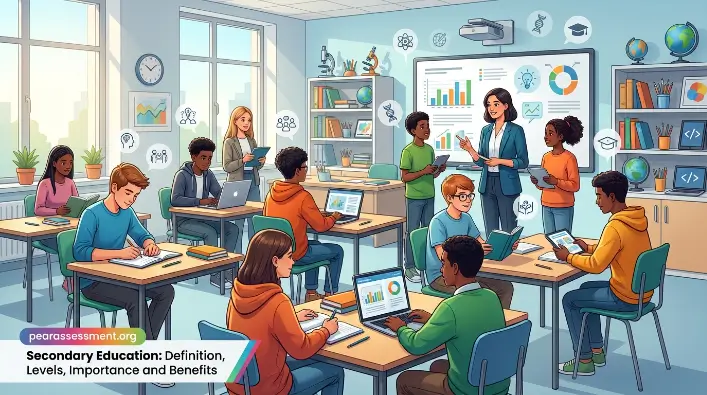
Secondary education is an important stage that shapes students’ academic abilities, personal growth, and future opportunities. It provides deeper knowledge, develops practical skills, and helps learners become prepared for higher studies and professional life.
Builds Knowledge and Essential Skills
Secondary education expands students’ understanding of different subjects and helps them develop skills needed in everyday life and future careers. During this stage, learners improve their ability to analyze information, communicate effectively, and solve problems independently.
It strengthens:
- Critical thinking for evaluating ideas and making better decisions
- Communication skills for sharing information clearly and confidently
- Problem-solving abilities for finding solutions to academic and real-world challenges
These skills help students become more independent learners and prepare them for future responsibilities.
Prepares Students for Higher Education and Careers
Secondary education creates a foundation for higher education and professional growth. It allows students to explore their interests, choose suitable subjects, and gain qualifications required for future opportunities.
It provides:
- University preparation through advanced subjects, exams, and academic knowledge
- Career choices by introducing different fields and study pathways
- Professional development through practical skills, discipline, and workplace awareness
By completing this stage successfully, students are better prepared to continue their education or enter the workforce with confidence.
Subjects and Curriculum in Secondary Education
The curriculum of secondary education is designed to provide students with academic knowledge, practical abilities, and skills needed for future studies and careers. Schools usually include a combination of compulsory subjects and optional courses to support students’ interests and goals. The subjects taught may vary by country, but most secondary school systems focus on building strong foundations and preparing learners for higher education.
Core Subjects
Core subjects are the main areas of study that every student usually learns during secondary education. These subjects develop essential knowledge and improve analytical, communication, and learning skills.
Common core subjects include mathematics, science, languages, and social studies. Mathematics improves logical thinking, science builds understanding of the natural world, languages strengthen communication, and social studies help students learn about society, history, and culture.
Elective and Vocational Subjects
Elective and vocational subjects allow students to explore specific interests and develop skills related to future careers. These courses provide practical learning opportunities alongside traditional academic studies.
Students may study areas such as technology, arts, business studies, and technical skills. These subjects help learners gain creativity, digital abilities, and career-focused knowledge that can support further education or employment opportunities.
Types of Secondary Education Schools
Secondary education is available through different types of schools that support students with various learning needs, academic goals, and career plans. The main types include public, private, and vocational schools, each offering different approaches to learning and skill development.
Public Secondary Schools
Public secondary schools are funded and managed by government authorities. They follow official curricula and provide education based on national or regional standards.
These schools focus on making education accessible to a large number of students. They offer core subjects, qualified teachers, and basic facilities to support academic development.
Private Secondary Schools
Private secondary schools are independent institutions operated by private organizations. They may use different teaching methods, specialized programs, or alternative curricula.
Many private schools provide additional facilities such as modern classrooms, technology resources, extracurricular activities, and advanced learning opportunities. These features help create a broader learning environment for students.
Vocational Secondary Schools
Vocational secondary schools focus on practical education and career preparation. They combine academic learning with technical training to help students develop workplace skills.
Students can study areas such as technology, business, healthcare, or skilled trades. These programs prepare learners for employment or further professional training after completing secondary education.
Secondary Education vs Primary and Higher Education
The education system is divided into different stages, each with a specific purpose. Secondary education connects primary learning with higher studies by helping students develop advanced knowledge, skills, and preparation for future goals.
| Education Level | Purpose | Stage |
| Primary Education | Basic learning and foundation skills | Early years |
| Secondary Education | Advanced learning and future preparation | Teenage years |
| Higher Education | Professional studies and specialized knowledge | Adult education |
Primary education focuses on building basic literacy, numeracy, and learning skills. Secondary education develops deeper subject knowledge and prepares students for higher studies or careers.
Higher education comes after secondary schooling and includes universities, colleges, and professional programs. It focuses on specialized fields and advanced qualifications for career development.
Benefits of Secondary Education
Secondary education helps students gain knowledge, develop skills, and prepare for future academic and career opportunities. It supports personal growth, confidence, and better decision-making.
Academic and Personal Development
Secondary education improves subject knowledge and strengthens learning abilities. It helps students build confidence, think critically, and handle challenges effectively.
It also encourages independent learning by teaching students to manage their studies, set goals, and take responsibility for their progress.
Career Opportunities
Secondary education provides qualifications and skills needed for future careers. It helps students explore career options and choose suitable pathways.
Through academic and practical learning, students develop skills that support higher education, vocational training, and employment opportunities.
Frequently Asked Questions
What is secondary education?
Secondary education is the stage of learning after primary education and before higher education. It develops advanced knowledge and prepares students for future studies or careers.
What age is secondary education for?
Secondary education usually starts between 11 and 13 years old and continues until students are around 16 to 18 years old, depending on the country.
Why is secondary education important?
It builds academic knowledge, essential skills, and confidence while preparing students for higher education, vocational training, and career opportunities.
What subjects are taught in secondary schools?
Common subjects include mathematics, science, languages, social studies, technology, arts, and vocational courses.
What comes after secondary education?
After secondary education, students can continue to higher education, vocational training, or enter the workforce depending on their goals and qualifications.
Conclusion
Secondary education is a crucial stage that helps students gain advanced knowledge, develop essential skills, and prepare for future opportunities. It connects primary learning with higher education by improving academic abilities, confidence, and career readiness.
A strong secondary school experience supports personal growth and helps students make better decisions about their education and careers. By providing quality learning and practical skills, secondary education creates a foundation for lifelong success.