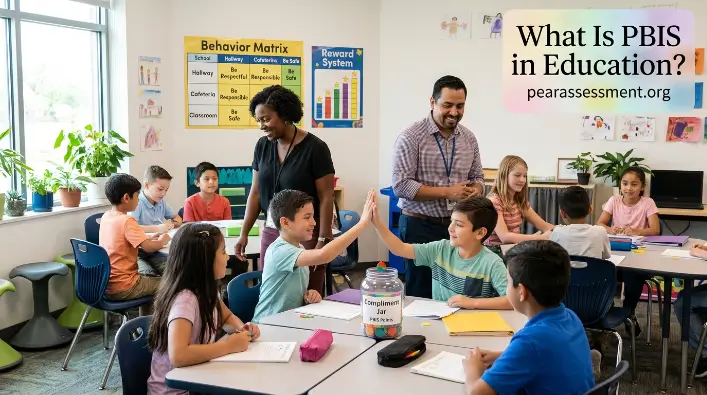

Welcome to Pear Assessment. If you are wondering what is PLC in education, PLC stands for Professional Learning Community. It is a group of educators who work together regularly to improve teaching and help students learn better. Instead of teachers working alone, they share ideas, study student progress, solve problems, and plan better instructional strategies.
A PLC in education focuses on continuous improvement. Teachers use student data, classroom evidence, and professional knowledge to decide what students need and what teaching methods may work best. A successful PLC is not simply another staff meeting; it is a structured way to support teacher collaboration, professional development, and better student learning outcomes.
What Is PLC in Education?
A Professional Learning Community (PLC) is a team of educators who work together to improve teaching and student learning. In a school, it may include teachers from the same grade, subject, department, or different grade levels. They meet regularly to discuss student needs, teaching practices, assessments, and classroom challenges. The main goal is to help teachers learn from one another and use evidence to improve instruction.
What Does PLC Stand for in Education?
PLC stands for Professional Learning Community. It is based on three main ideas: teachers learn together, focus on student learning, and continuously improve their teaching. This makes a PLC different from simply sharing ideas with colleagues because the team works toward a common learning goal and checks whether its teaching approach is helping students.
For example, Grade 5 mathematics teachers may meet to review student results and find that many students are struggling with fractions. They can compare teaching strategies, plan extra practice, and review student progress later. This helps teachers use collaboration to address specific learning needs.
What Is the Main Purpose of a PLC?
The main purpose of a PLC is to improve teaching and learning through structured collaboration.
A PLC helps teachers:
- Identify what students need to learn.
- Share effective teaching methods.
- Review student work and assessment results.
- Find learning gaps.
- Plan interventions.
- Monitor student progress.
- Improve their own professional skills.
The focus should always return to student learning. A PLC should answer practical questions such as:
What do students need to learn?
How will we know they have learned it?
What will we do if they are struggling?
What will we do if they already understand it?
PLC vs. a Traditional Staff Meeting
A PLC and a traditional staff meeting are not the same.
| PLC | Traditional Staff Meeting |
| Focuses on student learning | Often focuses on school information |
| Uses student evidence | May involve general announcements |
| Encourages teacher collaboration | Often has one-way communication |
| Plans instructional responses | May discuss administrative tasks |
| Measures progress | May not require follow-up |
A staff meeting can be useful for school operations, but a PLC should have a clear focus on professional learning, teaching, and student outcomes.
Read Also: What Is RTI in Education? Complete Beginner’s Guide
How Does a PLC Work in a School?

A PLC in education usually follows a continuous improvement process. Teachers identify a learning need, plan instruction, examine evidence, make changes, and review the results. This process turns teacher collaboration into practical classroom improvement by helping teachers understand student needs, choose suitable teaching methods, and adjust instruction based on learning results.
Teachers Identify What Students Need to Learn
First, teachers agree on what students should know or be able to do. To identify learning needs, they may use:
- Curriculum standards
- Learning objectives
- Previous assessment results
- Student work
- Classroom observations
For example, Grade 4 teachers may find that students understand basic multiplication but struggle with multi-step word problems. The PLC can then make this specific learning need its shared goal and focus its teaching efforts on improving that skill.
Teachers Plan and Share Instructional Strategies
Next, teachers discuss how they will teach the required skill. They may share:
- Lesson ideas
- Classroom activities
- Teaching resources
- Differentiation methods
- Instructional strategies
- Ways to support struggling students
A strategy that works well for one teacher may help another teacher solve a similar classroom challenge. Sharing these experiences allows educators to learn from one another and select approaches that better match their students’ needs.
Teachers Analyze Student Learning Data
Teachers then examine evidence of student learning. This may include:
- Quiz results
- Formative assessments
- Student assignments
- Projects
- Classroom observations
- Common assessments
The goal is not simply to collect student data. Teachers use the information to understand what students know, where they struggle, and what support or instructional changes may be needed.
Teachers Respond and Improve Instruction
After reviewing the evidence, teachers decide what to do next. Students who are struggling may receive additional instruction or intervention, while students who have mastered the skill may receive more challenging activities. Teachers then monitor progress and review the results with the PLC.
This creates a simple improvement cycle:
Identify → Plan → Teach → Assess → Respond → Improve
What Are the Key Characteristics of an Effective PLC?
An effective PLC has a clear purpose, a strong focus on student learning, and a supportive environment where teachers can openly share ideas and challenges. Its success depends on meaningful collaboration, the use of evidence, shared responsibility, and continuous professional learning. These elements help teachers work as a team and make practical improvements in classroom instruction.
Shared Focus on Student Learning
The most important characteristic of a PLC is its focus on student learning. Teachers should use PLC time to discuss what students need to learn, how well they are progressing, and which teaching approaches may help them improve. This keeps the team’s work connected to actual classroom needs.
PLC discussions should not be dominated by paperwork, announcements, or unrelated administrative tasks. Every meeting should have a clear connection to teaching, learning, or student progress.
Collaborative Teacher Culture
A strong PLC depends on genuine teacher collaboration. Teachers should feel comfortable sharing successful practices, discussing challenges, asking questions, and receiving constructive feedback from colleagues. Open communication helps the team find practical solutions to common classroom problems.
Collaboration becomes more effective when teachers see themselves as one team rather than working separately. They share knowledge and resources while supporting each other in improving teaching practices.
Data-Informed Decision-Making
Effective PLCs use evidence to guide teaching decisions. Teachers can examine student achievement data, student work, assessments, and classroom evidence to identify learning gaps and understand which areas need attention.
Data should support, not replace, professional judgment. Teachers can combine evidence with their classroom experience to choose appropriate instructional strategies and make better decisions about student support.
Collective Responsibility and Accountability
In a strong Professional Learning Community, teachers share responsibility for student success. Instead of viewing learning outcomes as the responsibility of one teacher, the team develops a shared mindset and works together to address student needs.
Teachers also follow through on agreed actions. When each member takes responsibility for their part, the PLC becomes more focused, consistent, and effective.
Continuous Professional Learning
A PLC also supports ongoing professional development. Teachers can learn about new teaching methods, assessment practices, curriculum approaches, and ways to support students with different learning needs.
This makes professional learning a continuous process rather than something that happens only during occasional training sessions. Teachers learn, apply new ideas, review the results, and improve their practice over time.
What Are the Benefits of PLCs in Education?
A well-organized PLC can support teachers, students, and the wider school community by creating a structured approach to teacher collaboration and continuous improvement. When educators share knowledge, examine student learning, and work toward common goals, they can make more informed teaching decisions and provide better support for students.
Benefits for Teachers
PLCs give teachers regular opportunities to learn from colleagues and improve their classroom practice. Key benefits include:
- Sharing knowledge and teaching experience
- Discussing classroom challenges
- Learning new instructional strategies
- Receiving professional feedback
- Planning lessons together
- Reducing professional isolation
- Strengthening teaching practices
This collaborative support means teachers do not have to solve every classroom problem alone. They can use the experience and ideas of their colleagues to find practical solutions.
Benefits for Students
Students remain at the center of an effective PLC. By regularly reviewing student learning, teachers can identify needs earlier and provide more focused support. Key benefits include:
- More consistent teaching
- Earlier identification of learning gaps
- Better-targeted support
- More suitable learning activities
- Closer monitoring of progress
- Greater attention to individual needs
When teachers work together and respond to evidence, they can adjust instruction to better match students’ learning needs.
Benefits for Schools
PLCs can also strengthen the overall school culture by encouraging teachers to work toward shared goals. They can support:
- Better communication among teachers
- Shared responsibility for learning
- Stronger curriculum alignment
- Greater professional trust
- More consistent expectations
- Continuous school improvement
When collaboration becomes part of the school culture, both teachers and students benefit from an environment focused on learning and improvement.
How PLCs Can Improve Student Achievement
A PLC does not automatically improve student achievement simply because teachers attend meetings. The quality of collaboration and the actions that follow are what matter. Teachers need to focus on clear learning goals, examine evidence, improve instruction, and monitor whether those changes are helping students.
The key is turning discussion into action. When teachers use professional learning to make practical instructional changes and review the results, PLCs can create a stronger connection between teacher collaboration and student outcomes.
Examples of PLCs in Education
There are different types of PLCs in education, and their structure usually depends on the needs of the school, teachers, and students. Some PLCs focus on a particular grade or subject, while others bring educators from different levels or locations together. Each type has the same basic purpose: improving teaching through collaboration and supporting better student learning.
Grade-Level PLC
A grade-level PLC includes teachers who teach the same grade. They can work together on common learning goals, compare student work, and share lesson ideas to address learning needs.
For example, Grade 3 teachers may meet to improve reading comprehension. After reviewing student work, they can identify common difficulties and plan additional support for students who need it.
Subject-Specific PLC
A subject-specific PLC brings together teachers who teach the same subject. This allows them to discuss subject-specific challenges, assessments, curriculum content, and effective teaching methods.
For example, high school science teachers may review a common assessment and find that students struggle to explain scientific evidence. The team can then develop new instructional strategies to strengthen this skill.
Cross-Grade PLC
A cross-grade PLC includes teachers from different grade levels who work together on related learning goals. This can help teachers understand how skills develop as students move from one grade to another.
For example, Grade 5 and Grade 6 mathematics teachers may review curriculum expectations and student performance together. This supports better curriculum alignment and can help identify learning gaps between grade levels.
Online or Virtual PLC
An online or virtual PLC allows educators to collaborate through digital platforms instead of meeting in person. Teachers from different schools or locations can use video meetings, shared documents, and online discussion tools to exchange resources and teaching ideas.
Virtual PLCs are especially useful when teachers cannot meet physically. They can also connect educators who have similar professional interests but work in different schools or regions.
Special Education PLC
A special education PLC may include special education teachers, classroom teachers, support staff, and other relevant professionals. The team works together to understand individual learning needs and plan appropriate support.
Common areas of discussion include:
- Differentiated instruction
- Student support
- Learning accommodations
- Intervention strategies
- Inclusive teaching practices
The goal is to make teaching more responsive and learning more accessible for students with different abilities and needs.
What Do Teachers Do in a PLC Meeting?
A PLC meeting should have a clear purpose, focused agenda, and specific student-learning goal. Instead of becoming a general staff discussion, teachers use the meeting to review evidence, discuss teaching practices, decide on actions, and follow up on previous decisions.
A simple PLC meeting can follow these steps:
- Review the previous action.
- Identify a specific student-learning goal.
- Examine relevant student evidence.
- Discuss effective teaching strategies.
- Decide on the next instructional action.
- Assign responsibilities.
- Set a date to review progress.
This structure helps teachers stay focused and ensures that each meeting leads to a clear next step.
Common PLC Activities
Common PLC activities can include:
- Collaborative lesson planning
- Reviewing student work
- Creating common assessments
- Analyzing student data
- Curriculum mapping
- Sharing teaching resources
- Discussing instructional strategies
- Peer observation
- Planning student interventions
- Reading professional resources
- Reviewing teaching results
For example, teachers may bring samples of student writing to a meeting and review them together. By identifying common weaknesses, they can agree on suitable teaching strategies and later check whether students’ writing has improved.
How to Create an Effective PLC in Your School
Creating a successful PLC requires clear goals, regular collaboration, useful evidence, and support from school leadership. Teachers need enough time to work together and a clear process for identifying learning needs, choosing teaching approaches, and reviewing results. When these elements are in place, PLC meetings become a regular part of professional learning rather than another routine school task.
Set a Clear Student Learning Goal
Start with one specific student-learning goal instead of a broad goal such as, “We need to improve mathematics.” A clearer goal would be: “Students will correctly solve multi-step fraction problems.” This gives teachers a specific skill to focus on and makes progress easier to measure.
A clear goal also helps the PLC stay focused during meetings. Teachers can connect their lesson planning, assessments, and instructional strategies directly to the learning outcome.
Establish Regular Collaboration Time
Teachers need protected time to collaborate regularly. Schools should create a consistent PLC schedule and make sure these meetings are not regularly replaced by administrative tasks or general announcements.
Regular collaboration allows teachers to follow up on previous decisions, share classroom experiences, and maintain continuous professional development. Consistency is important for turning teamwork into an established professional practice.
Use Evidence Instead of Opinions Alone
Teachers should use relevant evidence when making PLC decisions. Student work, assessments, classroom observations, and progress data can help the team understand what students are actually learning and where additional support may be needed.
The purpose of using evidence is not to judge teachers. Instead, it helps the team understand student needs and choose appropriate next steps based on real classroom information.
Create Shared Responsibilities
Every PLC member should have a clear role in the process. For example, one teacher can lead the discussion, another can record decisions, while others can prepare student evidence or research a useful teaching strategy.
Sharing responsibilities encourages participation and creates collective accountability. It also prevents the PLC from depending on only one person to organize and manage every meeting.
Measure Progress and Adjust
A successful PLC should regularly ask: Did the strategy work? Teachers can compare new student evidence with earlier results to see whether students have made progress.
If the results show improvement, teachers can continue or strengthen the approach. If progress is limited, the team can adjust the strategy and try another method. This creates a continuous improvement cycle based on evidence and action.
Common PLC Challenges and How to Solve Them
PLCs can face challenges related to time, participation, data, meeting focus, and leadership support. These problems can usually be managed with clear goals, good planning, regular collaboration, and a supportive school environment.
PLC Meetings Become Administrative Meetings
A common problem is using PLC time for announcements, paperwork, or general school business instead of professional learning and student learning.
Solution: Use a clear agenda and keep PLC meetings focused on teaching, student evidence, and specific learning goals.
Teachers Do Not Have Enough Time
Teachers already have many responsibilities, which can make regular collaboration difficult. Without protected time, PLC meetings may become rushed or inconsistent.
Solution: Schools should provide dedicated collaboration time and keep meetings focused on a small number of important goals.
Lack of Teacher Participation
Some teachers may hesitate to share ideas, ask questions, or discuss classroom challenges, especially if they feel their work is being judged.
Solution: Build a culture of trust and respectful communication. Make it clear that the purpose of the PLC is professional growth and problem-solving, not blame.
Too Much Data, Not Enough Action
Collecting large amounts of student data does not automatically improve learning. Too much information can make it difficult for teachers to identify what actually matters.
Solution: Use only the evidence needed to answer a specific learning question and make a clear instructional decision.
Lack of Leadership Support
PLCs may struggle when school leaders do not provide enough time, resources, guidance, or consistency. Without leadership support, collaboration can become difficult to maintain.
Solution: School leaders should protect PLC meeting time, provide necessary resources, set clear expectations, and support teachers throughout the process.
What Makes a PLC Successful?
A successful Professional Learning Community is focused, collaborative, and action-oriented.
The most important factors include:
- A clear focus on student learning
- Regular collaboration
- Trust between teachers
- Relevant student evidence
- Shared responsibility
- Practical instructional decisions
- Strong leadership support
- Follow-up and progress monitoring
The goal is not to hold more meetings. The goal is to make teacher collaboration useful.
A good PLC should help teachers answer three simple questions:
What are students learning?
How do we know?
What should we do next?
When teachers repeatedly use these questions to guide their work, the PLC becomes part of a meaningful school improvement process.
Frequently Asked Questions About PLCs
What does PLC stand for in education?
PLC stands for Professional Learning Community. It is a group of educators who work together regularly to improve teaching practices and student learning.
What is the main goal of a PLC?
The main goal of a PLC is to improve student learning through teacher collaboration, professional learning, evidence-based decisions, and continuous improvement.
How often should teachers meet in a PLC?
There is no single schedule that works for every school. However, PLCs are most useful when teachers have regular, protected collaboration time and follow up on decisions made during meetings.
What are some examples of PLC activities?
Common PLC activities include collaborative lesson planning, analyzing student work, reviewing assessments, sharing teaching strategies, discussing learning gaps, planning interventions, and monitoring student progress.
Are PLCs only for teachers?
No. Teachers are usually the main participants, but school leaders, instructional coaches, special education professionals, and other educators may participate when their knowledge supports the team’s goals.
Conclusion
Understanding what is PLC in education is important because Professional Learning Communities can give teachers a structured way to learn from one another and improve classroom instruction. A PLC is more than a regular meeting; it connects teacher collaboration, student evidence, professional learning, and instructional improvement.
The most effective PLCs keep students at the center. Teachers identify learning needs, share strategies, examine evidence, take action, and review the results. When this process is supported by time, trust, leadership, and clear goals, a PLC in education can become an important part of continuous school improvement.