
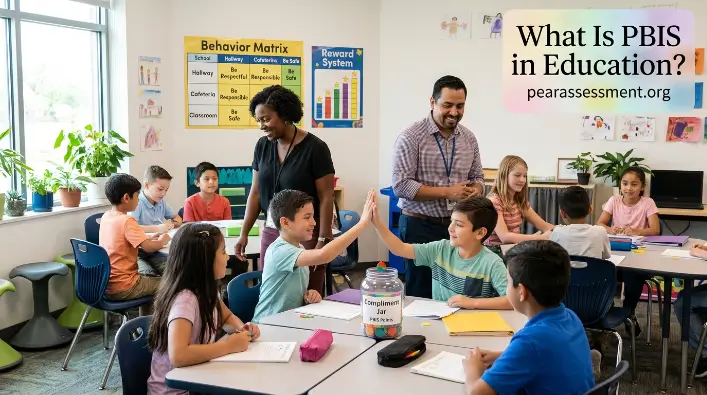
Welcome to Pear Assessment. If you are wondering what is PBIS in education, it is a framework that helps schools create positive, safe, and predictable learning environments. PBIS stands for Positive Behavioral Interventions and Supports. It focuses on teaching students appropriate behavior instead of relying only on punishment when problems happen.
PBIS uses positive behavior support, clear expectations, data, and different levels of help to meet student needs. It can support behavior, academics, social skills, and emotional development. The framework is organized into three levels, or tiers, so schools can provide basic support to everyone and more intensive help to students who need it.
What Is PBIS in Education?
PBIS in education is an evidence-based, tiered framework that helps schools support students’ behavioral, academic, social, and emotional needs. It creates a positive and predictable learning environment by teaching students clear behavior expectations instead of waiting for problems to happen. Teachers and staff model appropriate behavior, give useful feedback, and use student information to decide what type of support is needed. PBIS is not a single curriculum or fixed program. Schools can adapt the framework to their own needs while using staff teamwork, family involvement, professional development, and data-based decision-making to improve student outcomes.
What Does PBIS Stand For?
PBIS stands for Positive Behavioral Interventions and Supports. Each part explains an important part of the approach:
- Positive: Builds a supportive environment where students can succeed.
- Behavioral: Focuses on behaviors that affect learning and relationships.
- Interventions: Uses planned strategies to teach and improve useful behaviors.
- Supports: Provides different levels of help according to student needs.
Together, these elements help schools develop students’ social, emotional, and behavioral skills. The goal is not simply to stop unwanted behavior but to teach students better ways to respond and participate.
Is PBIS a Program or a Framework?
PBIS is a framework, not a single program that every school must follow in the same way. Schools choose appropriate evidence-based practices and organize them according to their students’ needs. This makes PBIS flexible enough for different schools, grade levels, and learning environments. It also encourages schools to review behavior information and adjust their strategies when something is not working.
Because of this flexibility, schools can connect PBIS with existing schoolwide behavior support systems rather than treating it as a separate activity. A strong approach combines clear expectations, consistent teaching, staff collaboration, and ongoing review to create lasting improvements in student behavior and the overall school environment.
Read Also: Remote Education Jobs: Best Careers, Skills, Salary, and How to Get Hired
How Does PBIS Work in Schools?
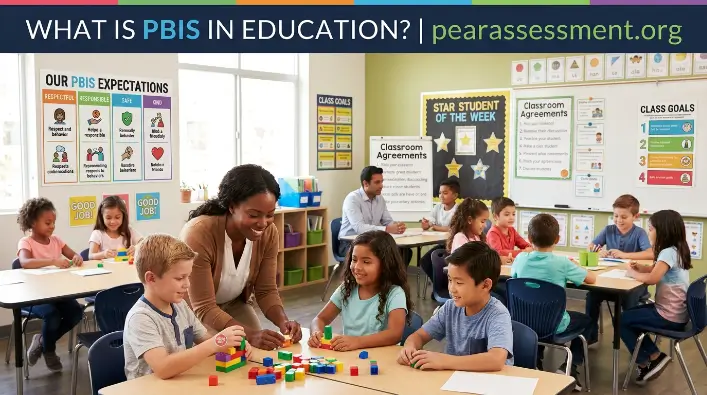
PBIS in education works by creating a clear and consistent system for teaching and supporting student behavior. Schools first establish simple expectations and explain what they look like in classrooms, hallways, cafeterias, buses, and other settings. Students practice these behaviors while teachers provide specific feedback and guidance. When a student struggles, staff use suitable behavior interventions instead of automatically applying the same consequence to everyone. Schools also review behavior data to identify patterns and decide when additional support is needed.
The Main Principles Behind PBIS
The main principles of PBIS in education focus on teaching positive behavior, preventing problems, and providing the right support. Key principles include:
- Teach expected behavior: Clearly explain and demonstrate what students should do.
- Practice important skills: Help students develop social and emotional skills through regular practice.
- Create predictable routines: Use consistent classroom and school routines.
- Give specific feedback: Recognize students when they demonstrate expected behavior.
- Respond respectfully: Treat behavior problems as opportunities for teaching and support.
- Use data: Review behavior information to identify patterns and guide decisions.
- Increase support when needed: Provide targeted or intensive help when basic strategies are not enough.
- Work as a team: Involve students, families, teachers, and school staff in the support process.
A strong PBIS system also checks whether these practices are effective and fair for different groups of students. This helps schools build a more positive school environment based on student needs rather than using the same approach for everyone.
What Are the Three Tiers of PBIS?
The three tiers of PBIS provide different levels of student support based on individual needs. Tier 1 gives all students a strong foundation through schoolwide expectations and positive behavior teaching. Tier 2 provides targeted help to students who need more support, while Tier 3 offers intensive, individualized interventions for students with more significant or ongoing needs. This tiered approach helps schools avoid using the same strategy for every student and instead match support to what each student requires.
Tier 1: Universal Support for All Students
Tier 1 is the foundation of PBIS in schools and is designed for every student. Schools establish a small number of clear expectations and teach students how to follow them in different settings. Teachers model appropriate behavior, allow students to practice, and provide specific feedback when expectations are followed. This makes behavior expectations clear instead of simply assuming students already know them.
For example, students may learn how to enter a classroom calmly, ask for help, work respectfully with classmates, and move safely through hallways. These behaviors are directly taught, practiced, and reinforced as part of everyday school routines.
Tier 2: Targeted Support for Some Students
Tier 2 is designed for students who need more help than the universal support provided at Tier 1. Schools may provide additional reminders, adult guidance, progress monitoring, or targeted interventions. Common examples include:
- Social skills groups
- Self-management strategies
- Check-in/check-out systems
- Additional academic or behavioral support
- More regular communication with families
Tier 2 is more focused than Tier 1 but does not usually require the same level of individualized planning as Tier 3. Schools should also check that Tier 1 practices are being implemented properly before moving a student to more intensive support.
Tier 3: Intensive Individualized Support
Tier 3 provides intensive individualized support for students who have significant needs or have not made enough progress with less intensive strategies. Support is based on the student’s specific strengths, challenges, and circumstances rather than a standard intervention used for everyone.
A Tier 3 plan may include a functional behavior assessment, individualized behavior support, person-centered planning, and collaboration between teachers, families, specialists, and other professionals. Tier 3 is not limited to students with a specific diagnosis. Any student who needs intensive support can receive it, with the goal of understanding the behavior and providing an effective, personalized solution.
What Does PBIS Look Like in a Classroom?
In a classroom, PBIS strategies are practical ways to teach and support positive student behavior. Teachers can explain classroom expectations at the start of the year and show students what those expectations look like in real situations. For example, instead of simply saying “be respectful,” a teacher can explain that respect means listening to others, using appropriate language, and giving classmates a chance to learn. Visual reminders, predictable routines, positive feedback, and reasonable choices can also make classroom management clearer and more consistent.
Examples of PBIS Strategies for Teachers
Teachers can use these PBIS examples during everyday lessons:
- Teach expectations: Explain and demonstrate expected behaviors clearly.
- Model routines: Show students how to behave in common classroom situations.
- Practice behaviors: Give students opportunities to practice important routines.
- Give specific feedback: Recognize positive actions with clear comments.
- Use visual reminders: Display simple reminders for classroom expectations.
- Offer appropriate choices: Give students reasonable options when possible.
- Monitor patterns: Notice when, where, or why behavior problems occur.
- Work with families: Communicate when a student needs additional support.
- Adjust strategies: Change the approach when a student is not making progress.
These strategies help teachers focus on positive behavior support and skill development instead of only reacting to problems after they occur.
A Simple PBIS Classroom Example
Suppose students often interrupt during lessons. Instead of repeatedly giving consequences, the teacher can explain what active listening means, model how to wait for a turn, and let students practice the behavior. The teacher can then give specific feedback when students listen and wait appropriately.
If interruptions continue, the teacher can review the behavior pattern and provide additional student support if needed. This simple example shows how PBIS combines teaching, practice, positive feedback, and monitoring to improve classroom behavior.
What Are the Benefits of PBIS?
Effective PBIS in education helps schools create a more positive, predictable, and supportive environment. It gives students clear behavior expectations and helps teachers respond to behavior more consistently. According to the Center on PBIS, strong implementation can support social-emotional development, academic outcomes, school climate, and educator well-being while reducing reliance on exclusionary discipline practices.
The main benefits include:
- Clearer expectations: Students understand what behaviors are expected.
- Consistent practices: Teachers and staff can use similar approaches across school settings.
- Stronger school climate: A supportive environment can improve relationships and student engagement.
- Earlier support: Schools can identify students who need extra help before problems become more serious.
- Better use of data: Behavior information helps teams make informed decisions.
- Stronger teamwork: Teachers and families can work together more effectively.
- Individualized support: Students with greater needs can receive more focused interventions.
PBIS is most effective when schools use it as an ongoing system. Regular review, staff collaboration, and adjustment of behavior support strategies help schools maintain long-term improvements rather than treating PBIS as a short-term behavior program.
PBIS vs. Traditional School Discipline
PBIS takes a proactive approach to student behavior, while traditional reactive discipline often focuses on responding after a problem occurs. PBIS aims to teach appropriate behavior, prevent repeated problems, and provide support based on student needs. The difference can be understood clearly through this comparison:
| PBIS Approach | Traditional Reactive Approach |
| Teaches expected behavior | May assume students know the rules |
| Focuses on prevention | Often responds after problems occur |
| Uses positive feedback | Often emphasizes consequences |
| Uses data for decisions | May rely more on individual judgment |
| Provides different levels of support | May use similar responses for different needs |
| Builds behavioral skills | Often focuses mainly on rule-breaking |
PBIS does not mean ignoring inappropriate behavior. Schools still need to address problems, but the response should be instructional, respectful, and consistent. The focus is on understanding student needs and helping students develop better ways to respond.
Is PBIS Just About Rewards?
No. PBIS is much more than giving students prizes or rewards. Positive acknowledgment can encourage expected behavior, but it is only one part of the broader framework. PBIS also includes teaching expectations, using positive behavior support, reviewing data, training staff, involving families, and providing different levels of intervention.
A school is not fully using PBIS if it only gives rewards without teaching appropriate behavior or checking whether students are actually improving. The main goal is to build lasting behavior skills and create a supportive school environment.
How Can Schools Implement PBIS Successfully?
Successful PBIS implementation requires proper planning, teamwork, and regular improvement. Schools should introduce PBIS step by step while considering feedback from teachers, students, families, and other staff members. The goal is to create a consistent behavior support system that meets student needs and continues to improve over time.
Step 1: Build a PBIS Leadership Team
A PBIS leadership team guides the school through the implementation process. It can include school leaders, teachers, counselors, behavior specialists, and other relevant staff. The team helps set goals, coordinate behavior support, and make sure PBIS practices are being used consistently across the school.
Regular meetings are important because they allow the team to review progress, discuss challenges, and make practical decisions. A strong team also helps keep teachers and staff involved throughout the process instead of treating PBIS as the responsibility of only one person.
Step 2: Define Clear Behavioral Expectations
Schools should choose a small number of simple expectations that students can easily understand and demonstrate. Common examples include being safe, respectful, and responsible. These expectations should be clear enough for students to know exactly what behavior is expected from them.
Schools should also explain how expectations apply in different settings, such as classrooms, hallways, cafeterias, and buses. This makes behavior expectations more practical and helps students understand how to use them in everyday situations.
Step 3: Teach and Practice Expectations
Students should be directly taught what expected behavior looks like instead of being expected to understand rules automatically. Teachers can explain the behavior, demonstrate it, and give students opportunities to practice. This approach helps students understand not only what to do but also how to use the behavior in real situations.
Regular practice is especially useful when students start a new school year, enter a new classroom, or when school routines change. Repeated practice can make positive behaviors easier to follow and maintain.
Step 4: Collect and Review Data
Schools should collect useful behavior data to understand where problems occur and which students or settings may need additional support. Teams can review information such as office referrals, classroom behavior, suspensions, attendance patterns, and lost learning time.
The purpose of collecting data is not simply to record mistakes. It helps school teams identify patterns, understand possible causes, and decide whether current strategies are working. This allows schools to make more informed decisions about student support.
Step 5: Provide Tiered Support
Students do not all need the same level of help. Schools can begin with universal support for everyone and then provide targeted or individualized interventions when a student needs additional assistance. This tiered support system helps schools match the level of intervention with each student’s needs.
For example, some students may succeed with regular classroom support, while others may need small-group assistance or more intensive individualized strategies. This makes PBIS more flexible and responsive than using one approach for every student.
Step 6: Review and Improve the System
PBIS implementation should be reviewed regularly to see whether the system is working effectively. Schools can consider student outcomes, staff feedback, behavior data, and implementation measures when evaluating their progress.
Tools such as the Tiered Fidelity Inventory can help schools check how well important PBIS practices are being implemented. Regular review allows schools to identify weak areas, adjust strategies, and maintain effective positive behavior support over time.
Common PBIS Mistakes Schools Should Avoid
Schools can weaken PBIS implementation when they treat it as a quick solution instead of a complete framework.
Common mistakes include:
- Treating PBIS as a reward-only system: Rewards are only one possible practice. Teaching, systems, data, and support are also important.
- Creating too many rules: A small number of clear expectations is easier to teach and remember.
- Failing to teach expectations: Students should be shown what expected behavior looks like.
- Applying expectations inconsistently: Staff should use common expectations and responses.
- Ignoring student and family input: Their experiences can help schools create more useful and culturally responsive practices.
- Using data only for punishment: Data should help teams understand patterns and improve support.
- Giving every student the same intervention: Students have different needs and may require different levels of support.
- Starting without staff training: Staff need time, guidance, coaching, and practice.
- Ignoring school systems: Teams should examine whether school practices themselves create barriers to student success.
What Is the Role of Teachers in PBIS?
Teachers play an important role in PBIS in education because they work with students every day. They teach clear behavior expectations, model appropriate actions, create predictable routines, and give specific feedback. These practices help students understand and develop positive behavior skills in everyday classroom situations.
Teachers also monitor student progress and share useful information with PBIS teams when extra support is needed. Working with families and other school staff helps provide consistent support across different settings. Ongoing training and family involvement can further strengthen the teacher’s role in successful PBIS implementation.
Frequently Asked Questions About PBIS in Education
What does PBIS mean in education?
PBIS means Positive Behavioral Interventions and Supports. It is an evidence-based, tiered framework that helps schools support student behavior, academic success, social development, and emotional well-being.
What is the main goal of PBIS?
The main goal is to create positive, predictable, safe, and supportive learning environments. PBIS helps schools teach expected behaviors, prevent problems, and provide additional support when students need it.
What are the three tiers of PBIS?
The three tiers are Tier 1, Tier 2, and Tier 3. Tier 1 provides universal support for everyone. Tier 2 provides targeted support for some students. Tier 3 provides intensive and individualized support for students with greater needs.
Is PBIS only for students with behavior problems?
No. Tier 1 PBIS support is designed for all students. Students who need more help can receive Tier 2 or Tier 3 support based on their individual needs.
Is PBIS the same as positive reinforcement?
No. Positive reinforcement can be one strategy used within PBIS, but PBIS is much broader. It includes teaching expectations, schoolwide systems, data-based decisions, staff support, family engagement, and tiered interventions.
Conclusion
Understanding what is PBIS in education starts with one simple idea: schools should actively teach and support positive behavior instead of relying only on punishment. Positive Behavioral Interventions and Supports provides a structured framework for doing this through clear expectations, evidence-based practices, data, and collaboration.
The three PBIS tiers allow schools to support everyone while providing more targeted help to students who need it. When teachers, families, and school teams work together, positive behavior support can become part of everyday school life. PBIS is most effective when it is implemented consistently, reviewed regularly, and adapted to the real needs of students.