
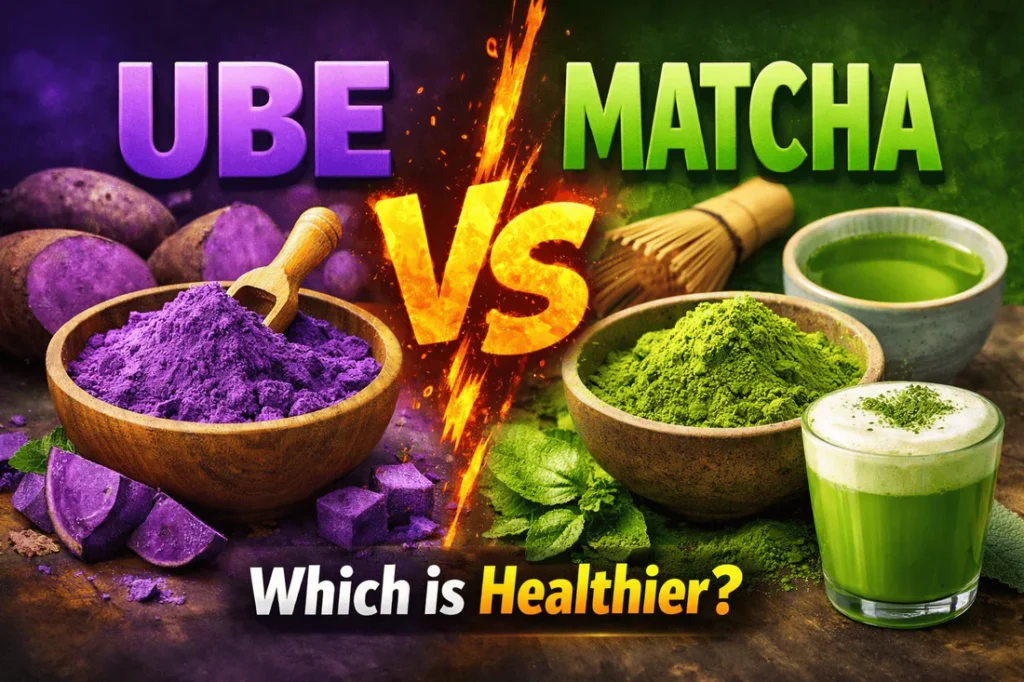
Ube has become one of the most recognizable purple foods in the world. Its vibrant color attracts attention instantly, yet its growing popularity goes far beyond appearance. Derived from a purple yam traditionally cultivated in the Philippines, ube offers a naturally sweet flavor and a distinctive nutritional profile. At the same time, matcha, the finely ground powder made from specially grown green tea leaves, continues to be celebrated for its concentration of plant compounds and its role in wellness routines.
Many people discover these two ingredients through colorful drinks, desserts, smoothies or social media trends. Their visual appeal is undeniable. Their nutritional characteristics, however, are very different. One comes from a root vegetable rich in carbohydrates and natural pigments. The other originates from tea leaves known for their caffeine content and unique antioxidant compounds.
Comparing ube and matcha is a bit like comparing two musicians playing different instruments. Both contribute something valuable, yet they create completely different experiences. Taste, texture, energy effects, nutrient composition and culinary versatility all vary significantly.
Understanding these distinctions helps consumers make informed choices based on personal preferences, dietary goals and lifestyle habits. Whether someone is searching for a naturally sweet ingredient, a colorful addition to recipes, or a beverage ingredient associated with alertness and focus, the differences become clear once each product is examined more closely.
Understanding the origins of ube and matcha
Ube comes from a species of purple yam known scientifically as Dioscorea alata. It has been cultivated for centuries across Southeast Asia, particularly in the Philippines, where it remains a staple ingredient in many traditional recipes. Ube is commonly used in cakes, pastries, ice cream, breads and beverages. Its naturally sweet flavor often reminds people of vanilla, pistachio and mild nutty notes.
The striking purple color of ube is created by naturally occurring pigments called anthocyanins. These compounds belong to a family of plant antioxidants found in various fruits and vegetables. Beyond aesthetics, anthocyanins have attracted scientific interest because of their role in plant defense mechanisms and their contribution to colorful diets.
As demand has expanded internationally, many consumers have started exploring products made from organic ube as a convenient way to enjoy the ingredient in drinks, smoothies and baked goods. Powdered forms allow easier incorporation into everyday recipes without requiring access to fresh purple yams.
Matcha, on the other hand, originates in Japan and is produced from specially shaded green tea plants. Before harvest, tea bushes are protected from direct sunlight for several weeks. This process increases chlorophyll production and influences the concentration of certain plant compounds. The leaves are then harvested, steamed, dried and ground into an exceptionally fine powder.
Unlike traditional tea infusions where leaves are steeped and discarded, matcha involves consuming the entire powdered leaf. This unique preparation method contributes to its reputation as a concentrated source of naturally occurring compounds found in green tea.
Nutrition profiles reveal major differences
One of the biggest distinctions between ube and matcha lies in their nutritional composition. Since ube is a root vegetable, it primarily provides carbohydrates. These carbohydrates serve as a source of energy and are accompanied by dietary fiber, vitamins and naturally occurring plant compounds.
A serving of ube powder or cooked ube generally contributes more calories than matcha because it contains starches typical of root vegetables. Many consumers choose ube powder when they want a colorful ingredient that adds both flavor and substance to recipes such as oatmeal, pancakes or smoothies.
Matcha offers a very different nutrient profile. Because it is derived from tea leaves, it contains minimal carbohydrates. Instead, it is known for naturally occurring caffeine, amino acids such as L-theanine and a variety of polyphenols. These compounds contribute to the distinctive characteristics associated with green tea products.
The presence of caffeine is particularly important when comparing the two ingredients. Ube contains virtually no caffeine, making it suitable for people who prefer to avoid stimulants. Matcha naturally contains caffeine, which can influence alertness and energy levels depending on serving size and individual sensitivity.
From a calorie perspective, matcha contributes very little energy when consumed as a tea. Ube contributes more calories because it functions as a food ingredient rather than simply a beverage component. Neither is inherently better. Their nutritional value depends on the role they play within an overall eating pattern.
How do their antioxidant properties compare?
Both ingredients contain antioxidants, yet the types of antioxidants differ significantly.
Ube owes much of its antioxidant reputation to anthocyanins, the pigments responsible for its vibrant purple appearance. These compounds are found in numerous purple, blue and red fruits and vegetables. A colorful diet rich in plant foods often includes anthocyanin-containing ingredients because they contribute diversity to nutrient intake.
Matcha contains a different group of compounds known as catechins. Among these, epigallocatechin gallate, commonly abbreviated as EGCG, has become one of the most researched compounds associated with green tea. Because matcha involves consuming the entire tea leaf, it provides higher concentrations of these compounds compared with many standard green tea infusions.
The comparison is not necessarily about determining which antioxidant source is superior. Instead, it highlights that ube and matcha provide different phytonutrients. Each contributes unique plant compounds that enrich dietary variety.
People often benefit more from consuming a wide range of colorful plant foods than from focusing exclusively on a single ingredient. Purple vegetables, green tea products, berries, leafy greens and other plant sources all bring distinct nutritional characteristics to the table.
Flavor and culinary uses create completely different experiences
Taste is often the deciding factor for consumers exploring these ingredients for the first time.
Ube delivers a naturally sweet flavor profile with creamy undertones. Many people describe hints of vanilla, coconut or mild nuttiness. Because of this sweetness, ube works exceptionally well in desserts, baked goods, breakfast bowls and milk-based beverages.
Matcha presents a very different sensory experience. Its flavor is often described as grassy, earthy and slightly vegetal. High-quality matcha can also offer subtle sweetness and umami characteristics. Individuals unfamiliar with green tea flavors may find matcha more intense during their first tasting experience.
Popular uses for ube
Ube’s versatility has contributed to its rapid rise in popularity across international markets. It can be incorporated into a wide variety of recipes while providing vibrant color without artificial additives.
- Smoothies
- Pancakes
- Ice cream
- Cakes
- Milk drinks
- Oatmeal
Because ube contributes both flavor and texture, it often serves as a foundational ingredient rather than a simple flavor enhancer. Its mild sweetness allows it to blend naturally into numerous preparations.
Popular uses for matcha
Matcha is commonly prepared as a traditional tea, yet modern culinary applications continue to expand. Cafés worldwide use matcha in lattes, baked goods and frozen desserts.
Its concentrated flavor means that relatively small amounts can influence an entire recipe. Unlike ube, matcha is often used primarily for flavor, color and functional properties rather than for bulk or texture.
Many consumers choose matcha beverages as an alternative to coffee, while others enjoy incorporating matcha into recipes that complement its earthy profile. The result is a distinctly different culinary role compared with purple yam products.
Which option fits your lifestyle best?
The answer depends largely on personal goals, preferences and dietary habits.
Someone seeking a naturally sweet ingredient for recipes may find ube particularly appealing. Its vibrant appearance, pleasant flavor and compatibility with desserts and breakfast foods make it an attractive choice for creative cooking.
Individuals looking for a beverage ingredient containing natural caffeine may gravitate toward matcha. The combination of caffeine and amino acids creates a profile that differs significantly from caffeine-free alternatives.
People focused on increasing dietary variety can benefit from including both ingredients in different contexts. Ube contributes the nutritional characteristics of a colorful root vegetable, while matcha provides compounds associated with green tea consumption.
Neither ingredient should be viewed as a miracle food. A balanced dietary pattern built around diverse fruits, vegetables, whole grains, legumes and minimally processed foods remains the foundation of good nutrition. Within that framework, both ube and matcha can serve valuable and enjoyable roles.
The key distinctions at a glance
The simplest way to understand the difference is to remember their origins. Ube is a purple yam, while matcha is powdered green tea. One delivers carbohydrates, fiber and natural sweetness. The other provides caffeine, tea polyphenols and an earthy flavor profile.
Ube is generally chosen for its taste, color and versatility in foods. Matcha is often selected for its tea heritage, distinctive flavor and role in beverages. Their antioxidant profiles differ, their culinary functions differ, and their nutritional characteristics differ.
For many people, the most rewarding approach is not choosing one over the other. Instead, it is appreciating how each ingredient contributes something unique. Ube brings the richness of a colorful root vegetable. Matcha offers the complexity of carefully cultivated tea leaves. Together, they demonstrate how diverse plant foods can enrich both nutrition and culinary enjoyment.