Walking into an on-camera acting class in Singapore feels different from the theater stage because the camera sits a few feet away, silent and unblinking. Since film and television call for something quieter and more controlled, there’s no back row to project to and no need for big gestures.
That’s why KrisP Production and other drama schools across Singapore have built programs around this shift. They focus on teaching actors how the lens changes everything about performance. After all, students who’ve spent years in stage productions often freeze up the first time they see themselves on playback.
This guide covers the differences between stage and screen acting in Singapore. You’ll also learn camera techniques, find quality acting classes, and understand what makes film work unique.
What Makes On-Camera Acting Different from Stage Performance?
On-camera acting requires smaller, more controlled movements because the lens captures details that would be invisible from a theater seat. But on stage, actors in Singapore usually learn to fill an entire auditorium with their presence.
Here are the main things that catch theater actors off guard when they switch to camera work:
Camera Proximity Changes Everything
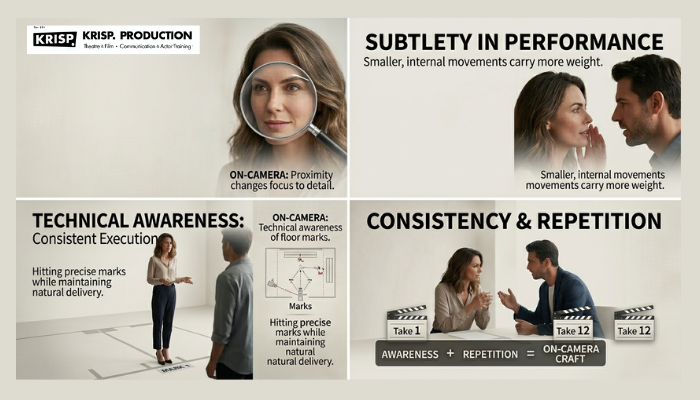
While acting on-camera, the lens is set up inches from your face during close-ups. That way, big theatrical gestures look like overacting on the screen. And actors in Singapore who come from stage backgrounds often struggle with this at first.
What’s more, the camera picks up even the smallest details, including a slight eyebrow raise, a tiny mouth twitch, and even the exact moment you swallow. That’s why film directors want you to think and feel authentically while the camera just records those reactions.
Intimate scenes also require genuine emotion without the safety buffer of physical distance. There’s no room to hide, so every reaction has to feel real and controlled.
Subtlety Wins Over Projection
Film actors use smaller movements and quieter vocal delivery compared to stage performances, as the camera magnifies even the tiniest facial shifts. As a result, restraint carries more power than big emotional displays.
The same shift applies to voice, as well. Projection techniques for voice from drama classes often come across as too loud and unnatural on camera, since theater and film demand very different energy levels (what works on stage can easily fall flat on screen).
Technical Awareness Becomes Part of the Craft
Actors must hit specific positions on the floor, often marked with tape, while still delivering natural and believable performances. They also need to work within set lighting conditions, adjusting their position slightly to stay well-lit without drawing attention to the movement.
Beyond performance choices, you’ll repeat the same take multiple times with consistent energy levels. In our on-camera sessions in Singapore, we’ve seen beginners struggle most with maintaining the same emotion, timing, and focus across each take. Sometimes, small changes in delivery can make scenes feel uneven, especially when shots are edited together.
Building Your Foundation in On-Camera Acting in Singapore
Starting on-camera training early lets you identify and fix stage habits before they stick. You can build that foundation with five practical steps as follows:
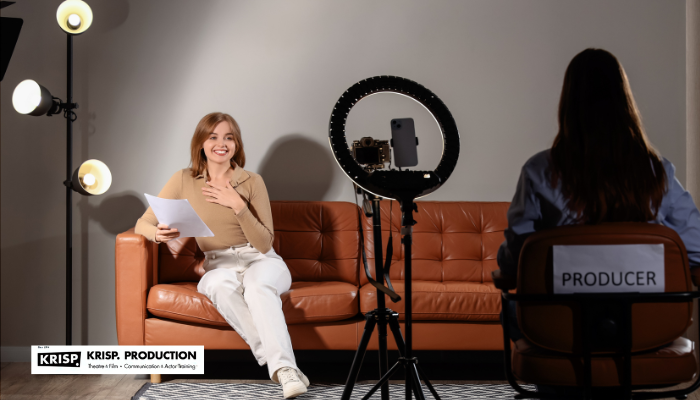
- Beginner Acting Classes with Camera Work: Most drama classes in Singapore focus on projection, voice, and filling a theater space. Therefore, you need acting classes that put you in front of an actual lens rather than just stage technique training.
- Watch Yourself on Screen: Practice frequently to identify distracting habits like blinking or fidgeting excessively. We understand it feels uncomfortable at first (think masterclasses on Netflix or film breakdowns on YouTube). But students who skip this step walk into auditions with no idea how they actually look on camera.
- Film Performance Analysis: You should study how professional actors in Singapore use stillness and subtlety frame by frame. Also, watch how they hold eye contact, when they break it, and how small their hand movements are, even during emotional drama scenes. With this approach, you’ll start to recognize patterns in acting techniques that separate screen work from stage performances.
- Self-Tape Setup at Home: Build a simple recording space for audition submissions and reel material. This way, you’ll gain confidence and technical skills without the pressure of a live acting class.
- Film Set Terminology: Learning the basic language used on sets across Singapore helps you to understand directions from directors quickly. When someone calls out “mark,” “eye line,” or “coverage,” you’ll know exactly what they need.
Bottom line: Students and actors who invest time in these exercises gain confidence more quickly than those who jump straight into advanced training classes without the foundation.
On-Camera Techniques Every Singapore Actor Should Practice
Most beginners think acting for the camera is just “being natural,” but it also involves technical control. Actors need to hit their marks, stay in frame, and work with lighting, while still delivering emotions that feel real and consistent.
So, let’s dive into the techniques to make you a professional actor on-camera:
Eye Line Control and Focus
Your eye line must stay consistent between takes, or the editor can’t cut shots together. We understand that looking directly into the lens feels unnatural, but it creates powerful moments of audience connection.
On the flip side, wandering eyes during emotional scenes kill the performance. For this reason, actors in Singapore working on film and television projects practice this eye consistency during drama classes and workshops.
Quick tip: Practice holding focus on a scene partner’s eyes without breaking, even when delivering intense dialogue. This technique builds stage presence that translates beautifully to screen work.
Working with Marks and Movement
During shooting, tape marks on the floor show you where to stand for proper lighting and focus. However, moving naturally to your mark without looking down takes practice and spatial awareness training, because one missed mark can waste an entire crew’s time and budget.
From there, choreographed blocking must look spontaneous on camera while hitting every technical requirement precisely. To handle this effectively, students and actors in Singapore learn this through exercises that combine movement with character development.
Understanding Frame Awareness
Knowing if you’re in a close-up or a wide shot completely changes how you perform. For instance, hand gestures that work in a wide shot can disappear completely in tight close-ups. Actors need to sense the frame boundaries without constantly checking or adjusting themselves on camera.
Furthermore, film directors in Singapore and elsewhere expect you to understand composition and body language instinctively. If your positioning doesn’t match the frame, the shot can look unbalanced or distract from the scene.
Beyond that, on-camera acting demands both imagination and technical precision, working together. But many non-actors struggle with frame awareness, as theater and stage productions don’t require the same level of control.
Getting Started with Acting Classes in Singapore
Singapore offers specialized on-camera programs that give you actual filming experience rather than just lectures about the film industry.
After working with film actors across Singapore, we’ve noticed that the best training combines practical camera time with immediate feedback. That’s why you should look for acting classes that provide actual filming sessions beyond theory about film acting. Another thing you’ll notice in strong programs is playback sessions, where you review your filmed scenes immediately.
For instance, Singapore specialists like KrisP Production offer on-camera training through techniques like Meisner, Chekhov, and Viewpoints, giving actors a foundation in authentic expression and emotional connection.
In Singapore, many programs focus on building confidence and performance skills for actors and non-actors alike. At the same time, course options often range from weekend workshops to longer training sessions.
So if you’re searching for acting classes in Singapore, check what’s included in the course fee and whether they offer coaching sessions for beginners.
Your Next Step into Film and TV Acting
On-camera acting in Singapore opens doors to film, television, and commercial work that stage training alone can’t provide. The skills you build through drama classes and workshops give you confidence in auditions and on set.
Theater and screen acting require different techniques, but both demand creativity and dedication to the craft. Therefore, students who invest in proper training see the difference in their work almost immediately.
Ready to start your journey? Explore acting classes at Krisp Production that offer hands-on camera time. Your life as a performer will begin with that first step in front of the lens.