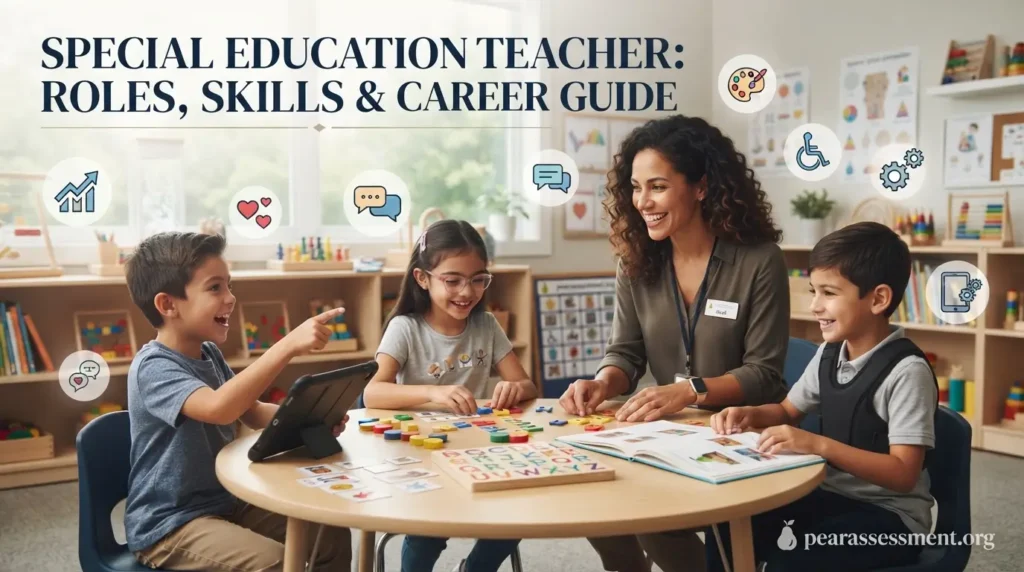
Welcome to Pear Assessment. A special education teacher plays an important role in helping students with disabilities and different learning needs succeed in school. These teachers provide individualized instruction, adapt lessons, assess student progress, and create supportive learning environments based on each student’s needs.
For many students, learning may require a different approach, additional support, or specialized teaching strategies. A special education teacher works closely with students, parents, general education teachers, and other professionals to help students achieve their educational goals.
What Is a Special Education Teacher?
A special education teacher is an educator who provides specialized instruction and support to students with disabilities or learning needs. These teachers adjust teaching methods and classroom activities to help students access the curriculum and make meaningful progress.
- Simple definition
- Who special education teachers work with
- Types of disabilities and learning needs they may support
- Difference between special education and general education
- Individualized instruction and student support
Special education teachers also collaborate with families, general education teachers, counselors, administrators, and other specialists to provide consistent support.
What Does a Special Education Teacher Do?
A special education teacher helps students with disabilities or different learning needs succeed in school. Their job is not limited to teaching regular lessons. They first understand each student’s strengths, challenges, and learning needs, then choose teaching methods that work best for that student.They may assess student needs, develop educational goals, adapt lessons, monitor progress, and provide individual or small-group support. They also work with parents, general education teachers, counselors, and other specialists to make sure students receive the right educational support.
Assess Student Needs and Progress
Special education teachers assess student needs to understand academic, behavioral, developmental, and learning challenges. They may review educational records, observe students, conduct assessments, and monitor classroom performance.
They also track student progress over time. If a student is not making expected progress, the teacher may adjust the teaching strategy, provide additional support, or introduce a different learning approach.
Create and Implement IEPs
An Individualized Education Program (IEP) outlines specific educational goals, services, accommodations, and support for an eligible student with a disability.Special education teachers may help develop IEP goals, implement the educational services described in the plan, and monitor progress toward those goals.
They may also participate in IEP meetings with parents, administrators, general education teachers, and specialists. Regular progress monitoring helps the team determine whether goals or instructional approaches need to be adjusted.
Adapt Lessons and Provide Individual Support
Special education teachers adapt lessons to make learning more accessible. They may simplify instructions, divide assignments into smaller steps, use visual resources, provide hands-on activities, or introduce assistive technology.
Teachers may also provide one-on-one or small-group instruction. Individual support allows students to receive additional practice and guidance while developing academic, social, behavioral, or practical skills.
Read Also: Texas Education Agency: Services, Schools & Resources
How to Become a Special Education Teacher
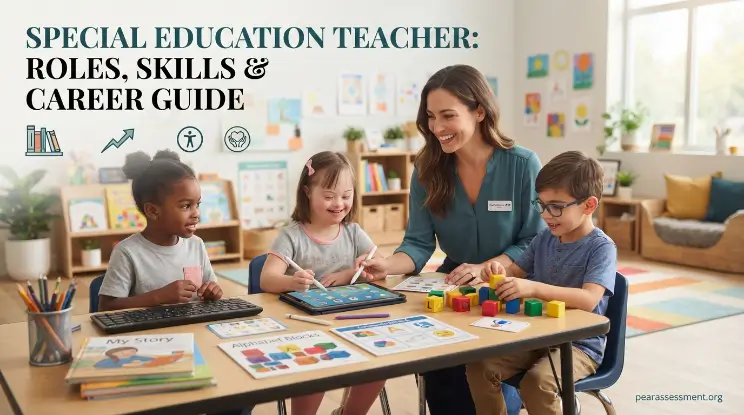
Becoming a special education teacher usually requires a combination of formal education, practical classroom experience, and state certification or licensure. The exact requirements can differ depending on the state where you want to teach, so it is important to check the specific rules in your state.In general, future teachers start by earning a bachelor’s degree in special education or completing an approved teacher preparation program. They then gain practical experience through student teaching, where they work with students under the guidance of an experienced teacher.
Earn a Bachelor’s Degree
A bachelor’s degree is typically the starting point for becoming a special education teacher in U.S. public schools. Students may choose a special education degree or an approved teacher preparation program.
These programs can include coursework in teaching methods, classroom management, educational psychology, assessment, and special education practices.
Complete Student Teaching
Student teaching provides practical classroom experience under the supervision of an experienced educator.
Future special education teachers learn how to plan lessons, work with students, manage classroom activities, assess learning, and adapt instruction to different needs.
Get State Certification or Licensure
Certification and licensure requirements vary by state. Candidates may need to complete an approved teacher preparation program, pass required examinations, complete background checks, and meet other state-specific requirements.
Anyone planning to work as a special education teacher should check the requirements of the state where they intend to teach.
Skills Every Special Education Teacher Needs
A special education teacher needs more than basic teaching knowledge. Since every student may have different abilities, learning styles, and challenges, teachers must understand how to adjust their teaching methods to meet individual needs.Important skills include patience, empathy, communication, creativity, problem-solving, and organization. A good special education teacher should be able to explain ideas in different ways, build positive relationships with students, work with parents and other professionals, and keep accurate records of student progress.
Patience and Empathy
Patience helps teachers work with students who may learn skills at different rates. Some students may need additional explanations, repetition, or practice before they understand a concept.
Empathy allows teachers to understand student experiences and respond to challenges with respect and encouragement.
Communication and Collaboration
Communication is important when working with students, parents, general education teachers, administrators, counselors, and other specialists.
Special education teachers need to explain student progress, discuss educational goals, share concerns, and work with others to provide consistent support.
Special Education Teacher Salary and Job Outlook
The salary of a special education teacher can vary depending on several factors. Teachers in different states or school districts may earn different salaries, while experience, education level, certification, and grade level can also affect pay. The type of school, such as a public, private, or specialized school, may also make a difference.Job opportunities can also vary by location and demand for special education services. Teachers with more experience, advanced education, or additional certifications may have more career opportunities and may qualify for higher-paying positions.
Average Special Education Teacher Salary
According to the U.S. Bureau of Labor Statistics, the median annual wage for special education teachers was $64,270 in 2024. The median means that half of special education teachers earned more than this amount, while the other half earned less.
However, not every special education teacher earns the same salary. Pay can vary based on the state, school district, education level, teaching experience, certification, and specific position. For example, an experienced teacher with advanced education may earn more than someone who is new to the profession.
Factors That Affect Salary
Several factors can affect how much a special education teacher earns. One of the biggest factors is location, because salaries can differ between states and school districts. Teachers with more years of experience may also earn higher salaries than those who are just starting.
Education and certification can also influence pay. Teachers with advanced degrees or additional certifications may qualify for higher salary levels or specialized positions. In addition, grade level and school setting can affect earnings depending on the responsibilities and requirements of the position.
Several factors can affect a special education teacher’s salary:
- State and district
- Education level
- Experience
- Grade level
- Certification
Location can have a major effect because school districts and states may use different salary schedules. Advanced education and additional experience may also increase earning potential.
Career Outlook
Special education teachers continue to have employment opportunities across the United States. The U.S. Bureau of Labor Statistics provides employment projections and reports annual openings resulting from employment changes and worker turnover.
Teachers can also develop their careers through additional certifications, advanced education, leadership responsibilities, and related educational positions.
Where Do Special Education Teachers Work?
Special education teachers can work in a variety of educational settings, depending on the needs of their students and the type of support provided by the school or district. They may teach students in elementary, middle, or high schools, as well as in preschools, private schools, and specialized education programs.Some teachers work in inclusive classrooms, where students with disabilities learn alongside their peers and receive additional support.
Common settings include:
- Public elementary schools
- Middle schools
- High schools
- Special education schools
- Preschools
- Private schools
Inclusive Classrooms
An inclusive classroom is a learning environment where students with disabilities learn alongside students in general education classes. The goal is to provide all students with opportunities to participate in the same classroom while giving additional support to those who need it.
A special education teacher may work closely with the general education teacher to adapt lessons, provide accommodations, support individual students, and monitor their progress. For example, they may modify an assignment, provide extra learning materials, or offer one-on-one help so a student can better understand the lesson and participate in classroom activities
Specialized Classrooms
Some students need more intensive or individualized support. These students may learn in specialized classrooms where teachers can provide smaller-group instruction and more targeted academic or behavioral support.
The appropriate classroom setting depends on the student’s individual educational needs and support plan.
Challenges and Rewards of Being a Special Education Teacher
Being a special education teacher can be both challenging and rewarding. Teachers often work with students who have different abilities, learning styles, behavioral needs, and educational goals. This means they may need to adapt lessons, manage different classroom situations, complete documentation, and provide individual support.
Common Challenges
Special education teachers may face several challenges in their daily work because students have different learning needs and require different types of support. Teachers may need to manage heavy documentation, behavioral challenges, lesson planning, and progress monitoring while still providing individual attention to students.
Another challenge is communicating with parents, general education teachers, counselors, and other specialists. Teachers may also experience emotional demands when students struggle with learning or behavior. Managing these responsibilities requires patience, organization, flexibility, and strong communication skills.
Common challenges may include:
- Heavy documentation
- Managing different learning needs
- Behavioral challenges
- Communication with multiple stakeholders
- Emotional demands
Teachers may need to balance classroom instruction with planning, documentation, meetings, progress monitoring, and communication with families and specialists.
Rewards of the Career
Being a special education teacher can be highly rewarding because teachers have the opportunity to see students make progress toward their individual goals. Even small improvements can be meaningful when a student has worked hard to develop a new skill.
Students may develop new academic skills, improve communication, become more independent, or gain confidence in the classroom. Seeing these changes can give teachers a strong sense of accomplishment and make their work more meaningful.
Students may:
- Develop new academic skills
- Improve communication
- Become more independent
- Gain confidence in the classroom
Seeing these achievements can give teachers a strong sense of accomplishment and make their work more meaningful.
Common Mistakes New Teachers Should Avoid
New special education teachers may face challenges as they learn how to manage different student needs and classroom responsibilities. Since every student may require a different approach, it can take time to understand which teaching strategies work best.
Avoiding common mistakes can help new teachers become more confident and effective. By paying attention to individual student goals, maintaining accurate documentation, communicating with parents and specialists, and adapting teaching methods when necessary, teachers can provide better support and create a positive learning environment.
New special education teachers should avoid several common mistakes:
- Using one teaching method for every student
- Ignoring individual goals
- Poor documentation
- Not communicating with parents and specialists
- Focusing only on academic performance
Understanding individual student needs and maintaining clear communication can help new teachers provide more effective support.
Is Being a Special Education Teacher a Good Career?
Yes, being a special education teacher can be a rewarding career for people who enjoy teaching, helping students, and adapting to different learning needs. The job can be challenging, but seeing students make progress and reach their goals can make the work meaningful.It can also offer opportunities for career growth, professional development, and leadership roles. However, teachers should be prepared for responsibilities such as lesson planning, documentation, communication, and supporting students with different needs.
- Who may be a good fit for the profession
- Personality traits that help
- Education and certification commitment
- Work-life considerations
- Career advancement opportunities
- Special education teacher vs. teacher assistant
Special education teaching can be challenging, but it can also be highly rewarding for those who are passionate about supporting students.
Frequently Asked Questions
What does a special education teacher do?
A special education teacher helps students with disabilities by adapting lessons to their learning needs. They also implement IEPs, monitor student progress, and work with parents, general education teachers, and other professionals.
What degree do you need to become a special education teacher?
In the U.S., a bachelor’s degree is typically required to become a special education teacher in public schools. Teachers also need to meet their state’s certification or licensure requirements.
How much does a special education teacher make?
The U.S. median annual wage for special education teachers was $64,270 in 2024. However, actual pay can vary based on location, experience, education, certification, and school setting.
What skills are important for special education teachers?
Important skills include patience, communication, empathy, critical thinking, organization, flexibility, and resourcefulness. These skills help teachers understand different student needs and adjust their teaching methods.
Is special education teaching difficult?
Special education teaching can be challenging because teachers manage different learning needs, classroom responsibilities, planning, and documentation. However, helping students make progress and reach their goals can make the career very rewarding.
Conclusion
A special education teacher plays an important role in helping students with disabilities and different learning needs succeed in school. The career requires patience, communication, flexibility, education, and proper certification, but it can also provide meaningful and rewarding experiences.
For people who enjoy teaching and supporting students, special education can be a fulfilling career. By adapting instruction, supporting individual goals, and building strong relationships, special education teachers can make a positive difference in their students’ educational lives.